
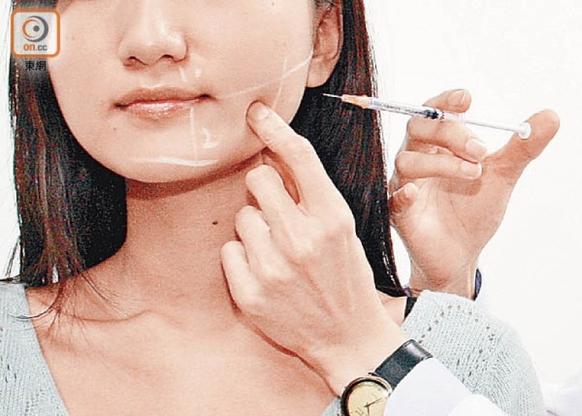
Botox瘦面之精準定位:咀嚼肌的位置。
國字面
瓜子面
Botox 瘦面
東方女性鍾情瓜子臉形,但偏偏亞洲的女性就特別多國字臉(即闊面,方面)。此種情況在韓國女性特別嚴重。國字臉的成因並非由於脂肪積聚而是咀嚼肌過份發達所至。Botox瘦面的方法就是把肉毒桿菌素打進咀嚼肌內,令到咀嚼肌的張力降低,從而令咀嚼肌委縮,面形變瘦變尖。所有治療都是肌肉注射。每邊注射 35-45 個單位,分開 5至 7針注射。注射後通常不會出現太多的紅腫情況,偶然地只會有幾個可見的針孔在皮膚上面。
咀嚼肌的位置(即是Botox瘦面針注射的位置)
以下文章總結了鍾經略醫生於「美容醫學碩士」課程及「臨床皮膚科碩士」課程中關於肉毒桿菌注射瘦臉(Botox瘦面針)的內容。
Botox瘦面針利用肉毒桿菌瘦咀嚼肌(咬肌)的原理 肉毒桿菌透過削弱下頜線厚實的咀嚼肌,使其逐漸萎縮,從而達到臉型變窄、下頜線更柔和的效果。解剖結構至關重要:咀嚼肌(咬肌)起自顴弓,止於下頜骨,分為淺層與深層,由三叉神經下頜支(V3)支配。
Botox瘦面之咬肌解剖
- 位置: 位於下頜兩側,呈四邊形肌肉。
- 起點: 顴弓(顴骨)。
- 止點: 下頜角及下頜支。
- 結構:
- 淺層肌頭 – 斜向下後方。
- 深層肌頭 – 垂直走向。
- 功能: 提升下頜骨(咀嚼時閉合下頜)。
- 神經支配: 咬肌神經,為三叉神經下頜支(V3)的分支。
- 臨床提示: 因磨牙、嚼口香糖或遺傳導致的咬肌肥大,常造成方形下頜,尤其在東亞人群中常見。
Botox瘦面之肉毒桿菌瘦咬肌機制
- 作用: A 型肉毒桿菌阻斷神經肌肉接點的乙醯膽鹼釋放。
- 效果: 收縮減弱 → 廢用性萎縮 → 肌肉數週內縮小。
- 結果: 下頜線更窄、更柔和。
Botox瘦面之注射的解剖學考量
- 安全區域: 屍體研究顯示三角區域可降低誤傷顏面神經分支、腮腺或血管的風險。
- 誤注射風險:
- 擴散至笑肌 → 笑容不對稱。
- 擴散至腮腺 → 腫脹或功能障礙。
- 過度削弱 → 咬合改變、咀嚼困難。
Botox瘦面之臨床技術要點
- 注射點: 每側通常 3–4 點,針對咬肌主體。
- 深度: 肌肉內,避免淺層擴散。
- 針具: 細針(30–32 號)以提高精準度。
- 劑量: 因人而異(常見每側 30–40 單位)。
- 輔助: 超音波導引可提高準確性並減少併發症。
Botox瘦面之風險與取捨
- 功能改變: 咬合力下降、咀嚼疲勞。
- 美學風險: 笑容不對稱、反常性突起或隨時間出現下頜鬆弛。
- 長期影響: 重複治療可能導致骨質吸收(仍在研究中)。
✅ 總結: 咬肌是強大的咀嚼肌,分為淺層與深層,由三叉神經 V3 支配。肉毒桿菌注射可削弱其功能,達到瘦臉效果。正確的注射區域、深度及對周邊結構(顏面神經、腮腺、血管)的認識,對避免併發症至關重要。
美容醫學碩士課程對於進行咬肌瘦臉肉毒桿菌注射(Botox瘦面)的醫生尤為重要,因為此治療不僅需要技術技巧,還需要深厚的解剖知識與臨床判斷。以下是該高階學位的重要性:
1. 高階解剖與生理 咬肌是強大的咀嚼肌,分為淺層與深層,由三叉神經下頜支(V3)支配。 碩士課程訓練醫師掌握精確的解剖結構、安全注射區域,以及如何避免擴散至鄰近肌肉(如笑肌、顴大肌),以防止笑容不對稱。
2. 以實證為基礎的臨床實踐 咬肌瘦臉的肉毒桿菌劑量有所不同(常見每側 30–40 單位)。 碩士課程強調實證醫學的操作規範,幫助醫師根據患者需求調整治療,同時降低併發症風險。
3. 風險管理 潛在風險包括咀嚼疲勞、咬合改變或美學不對稱。 碩士課程提供策略,讓醫師能預測、預防並處理併發症,包括辨識罕見但嚴重的副作用。
4. 專業標準與醫學倫理 美容醫學不僅是技術操作,還涉及患者篩選、知情同意與倫理規範。 碩士課程灌輸這些標準,確保醫師以負責任的態度進行咬肌瘦臉治療。
5. 多學科視角 碩士課程通常整合皮膚科學、解剖學、藥理學與心理學。 這種廣泛的視角幫助醫師理解肉毒桿菌不僅是美容工具,更與整體面部和諧及患者身心健康相關。
總結: 美容醫學碩士課程提供了進行咬肌瘦臉所需的高階解剖知識、實證規範、風險管理能力與倫理框架,使治療從單純技術操作提升為專業、以患者為中心的醫療服務
The following essay summarizes the teaching on facial slimming with Botox injections, as presented in the MSc Aesthetic Medicine and MSc Clinical Dermatology programs
Botox slimming of the masseter muscles works by weakening the thick chewing muscle at the jawline, leading to gradual atrophy and a slimmer, tapered lower face. The anatomy is crucial: the masseter originates from the zygomatic arch and inserts into the mandible, with superficial and deep portions innervated by the mandibular division of the trigeminal nerve (V3).
🦷 Masseter Muscle Anatomy
- Location: Each side of the jaw, forming a quadrilateral muscle.
- Origin: Zygomatic arch (cheekbone).
- Insertion: Angle and ramus of the mandible (lower jaw).
- Structure:
- Superficial head – runs obliquely downward and backward.
- Deep head – runs vertically.
- Function: Elevates the mandible (jaw closure during chewing).
- Innervation: Masseteric nerve, a branch of the mandibular division of the trigeminal nerve (cranial nerve V3).
- Clinical note: Hypertrophy (enlargement) from bruxism, gum chewing, or genetics can create a square jawline, especially common in East Asian populations.
💉 Botox Mechanism in Masseter Slimming
- Action: Botulinum toxin type A blocks acetylcholine release at the neuromuscular junction.
- Effect: Reduced contraction → disuse atrophy → muscle shrinks over weeks.
- Result: Narrower, softer jawline contour.
⚠️ Key Anatomical Considerations for Injection
- Safe zones: Cadaveric studies identify triangular regions with lower risk of hitting facial nerve branches, parotid gland/duct, or facial vessels.
- Risks if misplaced:
- Diffusion into risorius muscle → smile asymmetry.
- Spread to parotid gland → swelling or dysfunction.
- Over‑weakening → bite changes, chewing difficulty.
📋 Clinical Technique Highlights
- Injection points: Usually 3–4 per side, targeting the bulk of the masseter.
- Depth: Intramuscular, avoiding superficial diffusion.
- Needle: Fine (30–32 gauge) for precision.
- Dosage: Varies (commonly 30–40 units per side, adjusted per patient).
- Guidance: Ultrasound can improve accuracy and reduce complications.
🔎 Risks & Trade‑offs
- Functional changes: Reduced bite force, chewing fatigue.
- Aesthetic risks: Smile asymmetry, paradoxical bulging, or jowl sagging over time.
- Long‑term: Possible bone resorption with repeated treatments (still under study).
✅ Summary: The masseter muscle is a powerful chewing muscle with superficial and deep heads, innervated by V3. Botox injections weaken it, leading to slimming of the jawline. Safe injection zones, correct depth, and awareness of surrounding structures (facial nerve, parotid gland, vessels) are critical to avoid complications.
An MSc in Aesthetic Medicine is particularly important for practitioners performing Botox slimming of the masseter muscles because this treatment requires not only technical skill but also deep anatomical knowledge and clinical judgment. Here’s why the advanced degree matters:
1. Advanced Anatomy & Physiology
- The masseter is a powerful chewing muscle with superficial and deep heads, innervated by the mandibular branch of the trigeminal nerve (V3).
- MSc training ensures practitioners understand the precise anatomy, safe injection zones, and how to avoid diffusion into nearby muscles (e.g., risorius, zygomaticus major) that could cause smile asymmetry.
2. Evidence‑Based Practice
- Botox dosing for masseter slimming varies (commonly 30–40 units per side).
- MSc programs emphasize evidence‑based protocols, helping practitioners tailor treatment to patient needs while minimizing complications.
3. Risk Management
- Potential risks include chewing fatigue, bite changes, or aesthetic asymmetry.
- MSc training equips practitioners with strategies to anticipate, prevent, and manage complications, including recognition of rare but serious side effects.
4. Professional Standards & Ethics
- Aesthetic medicine is not just about technique—it involves patient selection, informed consent, and ethical practice.
- MSc programs instill these standards, ensuring practitioners approach Botox slimming responsibly.
5. Multidisciplinary Perspective
- MSc courses often integrate dermatology, anatomy, pharmacology, and psychology.
- This broad perspective helps practitioners understand Botox not only as a cosmetic tool but also in the context of overall facial harmony and patient wellbeing.
Summary: An MSc in Aesthetic Medicine provides the advanced anatomical knowledge, evidence‑based protocols, risk management skills, and ethical framework necessary for safe and effective Botox slimming of the masseter muscles. It elevates practice from a technical procedure to a professional, patient‑centered treatment.