【注意:本文章及真實病人照片均源自鍾經略醫生的臨床皮膚科碩士及美容醫學碩士課程案例,屬於原創醫學文獻。因此,本院嚴格保留所有版權。同時,我們禁止任何形式的轉載與複製。】
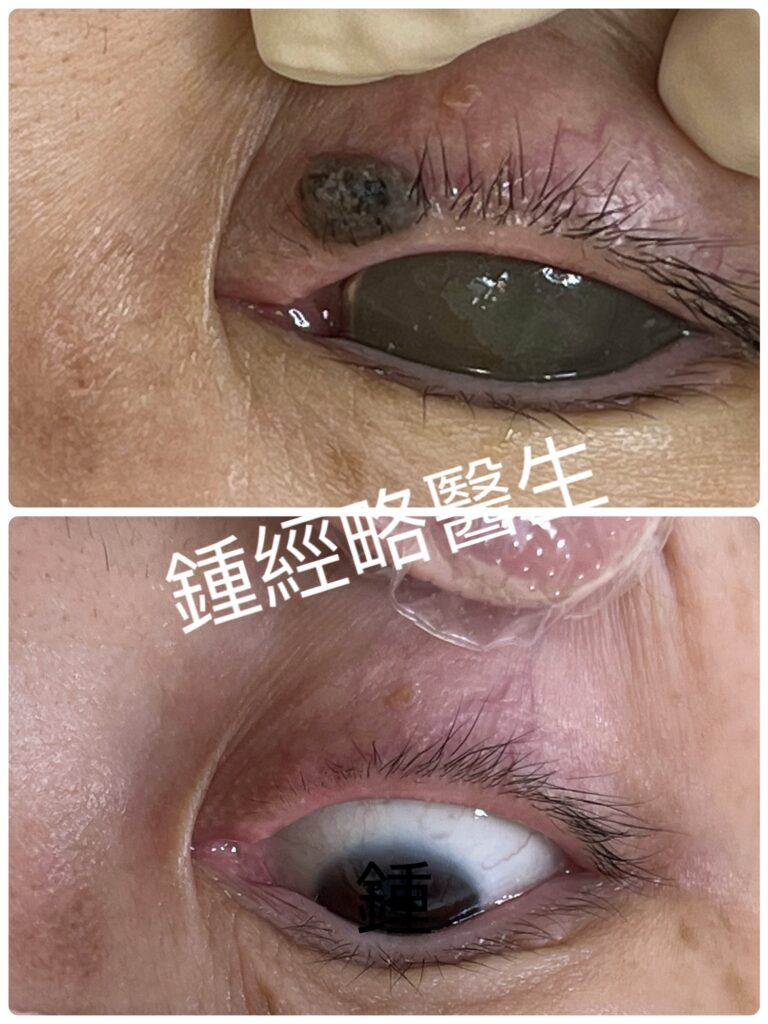
Case Presentation
A 52-year-old female with an unremarkable past medical and family history presented for cosmetic evaluation of a right upper eyelid margin lesion. She was taking no long-term medications. The lesion had been present for 30 years without changes in size, shape, or pigmentation, and without pain, tenderness, itching, ulceration, or bleeding. Visual acuity and ocular exam were completely normal.
Due to the lesion’s typical benign clinical features, we elected a combined procedural approach: an initial shave excision followed immediately by carbon dioxide (CO2) laser ablation. This combined technique ensured histopathological safety, reduced the risk of local recurrence, and optimized cosmetic outcomes.
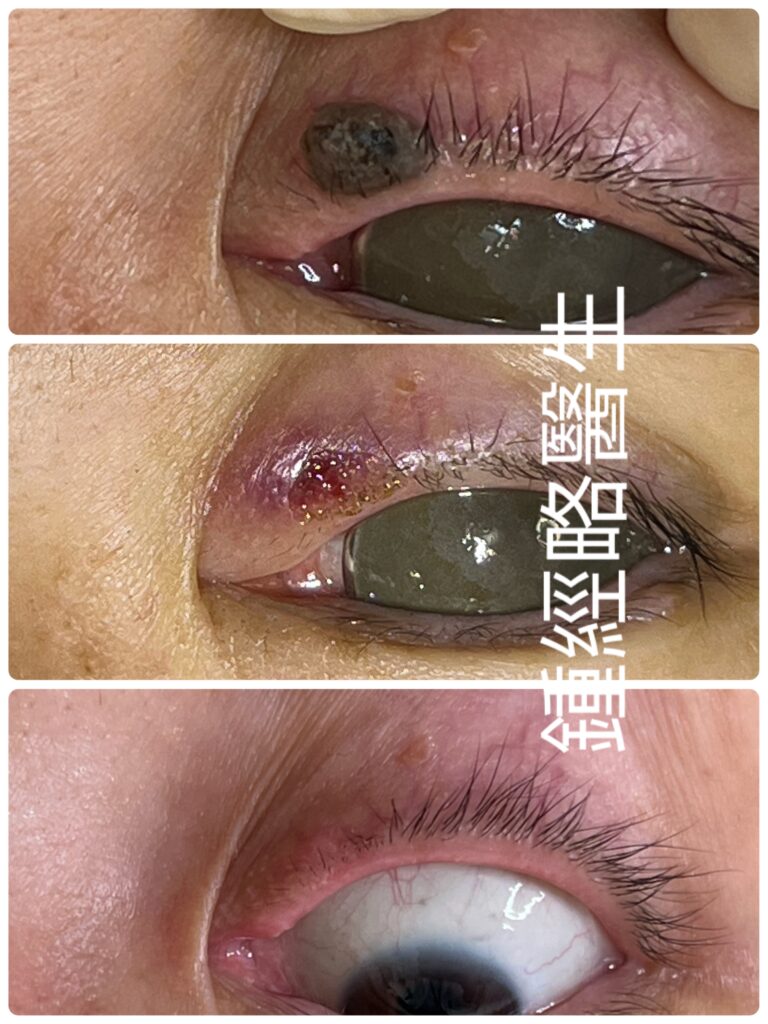
Under local anesthesia, we first performed a shave excision to obtain a specimen for formal pathology. Next, we applied CO2 laser ablation to vaporize the remaining deep melanocyte nests. Because the laser provided instant thermal hemostasis with minimal char, we clearly visualized the underlying deep architecture. The surgical endpoint was reached when all gross melanocyte roots were completely cleared while sparing the deep hair follicle bulbs. Pathology subsequently confirmed a benign nevus.
At the 3-month follow-up, the patient demonstrated complete eyelash regrowth along the treated segment and a minimal, clean scar without eyelid distortion or functional impairment. The patient was extremely satisfied with the final cosmetic result.
病例報告
一名 52 歲女性,既往病史及家族史無特殊,因右上眼瞼緣病變影響美觀前來求診。患者未長期服用任何慢性病藥物。該病變已存在 30 年,期間大小、形狀或色素沉著均無明顯變化,且無疼痛、壓痛、瘙癢、潰瘍或出血情形。患者的視力與眼部檢查結果完全正常。
鑑於該病變具有典型的良性痣臨床特徵,我們選擇了聯合手術方案:先進行削切切除術(Shave excision),隨後立即進行二氧化碳(CO2)雷射/激光氣化切除術。這種聯合技術既保障了組織病理學上的安全性,又降低了局部復發的風險,同時優化了美容效果。
瞼緣脱痣程序:在局部麻醉下,我們首先執行了削切切除術,以獲取標本進行正式的病理檢查。接著,我們使用 CO2 雷射氣化剩餘的深層黑色素細胞巢(痣根)。由於雷射能提供即時的熱止血效果且產生的焦炭極少,我們能夠清晰地觀察到下方的深層組織結構。當肉眼可見的黑色素細胞根部被完全清除,同時深層的睫毛毛囊球部得以完好保留時,即達到了手術終點。隨後的病理報告亦證實該病變為良性色素痣。
術後 3 個月隨訪時,患者治療區域的睫毛已完全再生,疤痕極不明顯,無眼瞼變形或功能障礙。患者對最終的美容效果非常滿意。
Advantages of CO2 Laser Ablation over Traditional Surgical Excision for Benign Upper Eyelid Margin Moles
Removing a mole (nevus) from the margin of the upper eyelid presents unique surgical challenges. The eyelid margin houses critical functional structures, including hair follicles for eyelashes, delicate blood vessels, and the structural plate that maintains eyelid curvature. Traditional surgical excision often compromises these delicate structures. In contrast, carbon dioxide (CO2) laser ablation offers a precise, tissue-sparing alternative that significantly improves clinical and functional outcomes.
Key Clinical Benefits of CO2 Laser Ablation
1. Preservation of Eyelid Contour and Margins
Traditional excision usually requires cutting out a full-thickness wedge of tissue from the eyelid margin. Surgeons must then pull the remaining edges together and suture them closed. Consequently, this tension can distort the natural arch of the eyelid or create an ugly notch along the margin.
In contrast, a CO2 laser allows the surgeon to vaporize the mole layer by layer with pinpoint accuracy. The laser targets only the lesion, leaving the surrounding tarsal plate and structural margin completely intact. Thus, the eyelid retains its smooth, natural curvature without structural distortion.
2. Preservation of Eyelash Follicles and Growth
When a surgeon performs a full-thickness traditional excision, they cut out a entire block of tissue. This tissue block contains hair follicle bulbs, which forever destroys the eyelash roots in that segment. Furthermore, as the surgical wound stretches and gaps during healing, a permanent bald spot (madarosis) forms along the lid margin.
CO2 laser ablation preserves these essential roots through selective energy application:
- Clean Immediate Wound Bed: Immediately following CO2 laser ablation, the surgical bed shows no char and zero active bleeding.
- Visible Microvascular & Follicular Architecture: Small blood vessels inside and around the wound remain intact and clearly visible. Crucially, the base of the wound is completely cleared of melanocyte nests (mole roots) while the deep hair follicle bulbs (hair roots) remain viable.
- Full Follicular Recovery: Because the laser spares the deeper hair bulbs, eyelashes can regenerate fully during the healing process, provided the patient manages the wound properly to prevent infection and inflammation. Clinical follow-up photos taken 3 months post-operation routinely confirm complete eyelash regrowth across the treated area.
3. Sutureless Procedure
Traditional excision always requires delicate sutures on the eyelid margin. These stitches often rub against the ocular surface, causing discomfort, tearing, and corneal irritation until a clinician removes them.
Because the CO2 laser thermally seals microscopic blood vessels as it cuts, the wound bed remains completely dry without active bleeding. Consequently, the surgeon does not need to place any sutures. The open wound heals cleanly by secondary intention under a thin protective crust.
4. Superior Cosmetic Results with Minimal Scarring
Incision lines along the lid margin frequently heal with visible linear scars or tissue contracture. CO2 laser energy causes controlled thermal heating in the immediate sub-surface tissue, which stimulates healthy collagen remodeling. As a result, the treated surface smooths out flat, blending seamlessly with the surrounding eyelid skin and minimizing noticeable scar tissue.
5. Faster Recovery and Lower Infection Risk
The intense thermal energy of the CO2 laser beam instantly sterilizes the surgical field as it vaporizes tissue. This thermal effect significantly lowers the risk of postoperative bacterial contamination. Patients experience minimal swelling and discomfort, allowing them to return to their normal daily activities much faster than traditional wedge-resection patients.
Important Clinical Considerations
Despite its distinct surgical advantages, CO2 laser ablation involves two important clinical limitations that clinicians must manage carefully:
| Consideration | Clinical Challenge | Solution / Management Strategy |
| Lack of Pathology Tissue | Direct laser ablation vaporizes the mole tissue, leaving no specimen to send to histopathology to rule out malignancy (such as basal cell carcinoma or melanoma). | Perform a primary shave excision first to obtain a tissue specimen for pathology. Then, proceed immediately with the CO2 laser to vaporize the remaining deep roots. |
| Risk of Recurrence | Benign nevus cells can extend into deeper dermis layers. If laser ablation stops too shallow to prevent scarring, residual melanocytes may cause pigment recurrence over time. | Fully ablating deeply rooted nevi inevitably creates a deeper tissue defect. Rather than allowing it to heal by secondary intention, the surgeon close the wound by first intention. This technique minimizes recurrence while ensuring a clean, precise aesthetic result. |
二氧化碳(CO2)雷射/激光氣化切除術相較於傳統手術切除在上瞼緣良性痣治療中的優勢
切除上眼瞼緣痣(色素痣/墨)面臨著獨特的解剖學與手術挑戰。眼瞼緣包含關鍵的功能性結構,包括睫毛毛囊、微血管,以及維持眼瞼弧度的瞼板結構。傳統的手術切除往往會損傷這些精細結構。相比之下,二氧化碳(CO2)雷射/激光氣化切除術提供了一種精確且保留組織的替代方案,能顯著改善臨床與功能性預後。
CO2 雷射氣化切除術的主要臨床優勢
1. 保留眼瞼輪廓與眼瞼緣結構
傳統切除術通常需要從眼瞼緣切除全層的楔形組織。醫師隨後必須將剩餘的創緣拉攏並縫合。因此,這種張力可能會扭曲眼瞼的自然弧度,或在眼瞼緣留下難看的缺口(V形缺損)。
相反地,CO2 雷射使醫師能夠逐層精確氣化色素痣。雷射僅針對病變組織,同時完全保留周圍的瞼板與眼瞼緣結構。因此,眼瞼能保持平滑自然的弧度,不會產生結構變形。
2. 保留睫毛毛囊與毛髮生長
當醫師執行全層傳統切除時,會切除整塊組織。這塊組織包含毛囊球部,會永久破壞該區域的睫毛根部。此外,隨著手術傷口在癒合過程中拉伸與裂開,眼瞼緣會形成永久性的禿髮區(睫毛脫落)。
CO2 雷射氣化切除術透過選擇性能量應用保留了這些關鍵根部:
- 乾淨的即時傷口床: 在 CO2 雷射氣化切除後,手術區域立即呈現無焦炭(Char)且完全無主動出血的狀態。
- 清晰可見的微血管與毛囊結構: 傷口內部及周圍的微小血管保持完整且清晰可見。至關重要的一點是,傷口底部已完全清除黑色素細胞巢(痣根),同時深層的睫毛毛囊球部(髮根)仍保持活性。
- 毛囊完全恢復: 由於雷射保留了較深層的毛囊球部,只要患者妥善管理傷口以防止感染和發炎,睫毛即可在癒合過程中完全再生。術後 3 個月的臨床隨訪照片定期證實,治療區域的睫毛已恢復全面再生。
3. 無需縫合
傳統切除術總是需要在眼瞼緣進行精細的縫合。這些縫線常會摩擦眼球表面,造成不適、流淚及角膜刺激,直到拆線為止。
由於 CO2 雷射在切割的同時能熱凝固封閉微血管,傷口床能保持完全乾燥且無主動出血。因此,醫師無需進行任何縫合。開放性傷口能在薄保護痂皮下透過二期癒合(Secondary intention)乾淨地復原。
4. 卓越的美容效果與極小化疤痕
沿著眼瞼緣的切口線常常在癒合後留下明顯的線狀疤痕或組織收縮。CO2 雷射能量能在即時淺表組織中產生可控的熱加熱作用,進而刺激健康的膠原蛋白重塑。結果使治療表面平整,與周圍眼瞼皮膚完美融合,將明顯的疤痕組織降至最低。
5. 恢復更快且感染風險更低
CO2 雷射光束的高溫熱能可在氣化組織的同時立即對手術區域進行滅菌。這種熱效應顯著降低了術後細菌污染的風險。患者僅會經歷極輕微的腫脹與不適,相較於接受傳統楔形切除術的患者,能更快恢復正常日常生活。
瞼緣脱痣的重要臨床考量
儘管 CO2 雷射氣化切除術具有顯著的手術優勢,但仍包含兩個必須由臨床醫師謹慎管理的限制:
| 臨床考量 | 臨床挑戰 | 解決方案 / 管理策略 |
| 缺乏病理組織(切片) | 直接雷射氣化會使痣組織蒸發,無法留存標本送交組織病理學檢查以排除惡性腫瘤(如基底細胞癌或黑色素瘤)。 | 先進行削切切除術(Shave excision)以獲取組織標本進行病理檢查;隨後立即使用 CO2 雷射氣化剩餘的深層痣根。 |
| 復發風險 | 良性色素痣細胞可能延伸至較深的真皮層。完整氣化深層痣根不可避免地會留下較深的組織缺損。 | 不採用二期癒合,而是由醫師進行一期縫合(First intention)來關閉傷口。此技術能在確保乾淨、精準美容效果的同時,將復發率降至最低。 |