註:唇紅緣的香港書面語為唇線位置
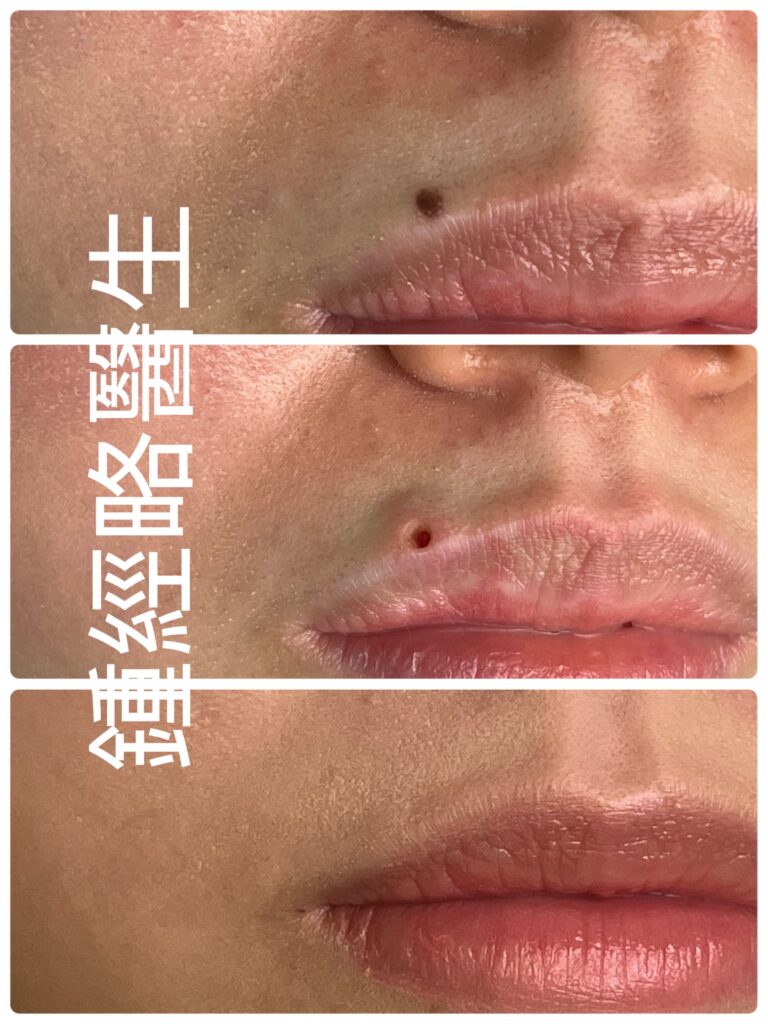
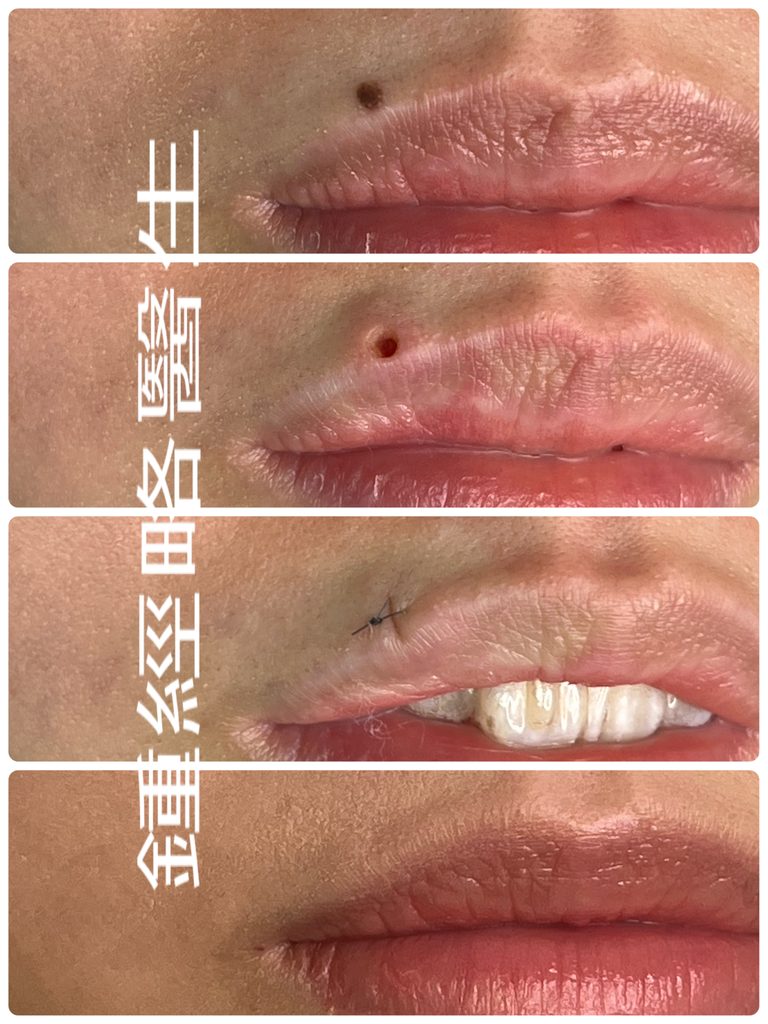
以上是鍾經略醫生在進行激光脫墨後傷口縫合的情況-拆線癒合後的疤痕幾乎看不見
Above: wound suturing following laser mole removal by Dr Chung King Lueh. The scar after suture removal is almost unnoticeable
以下少女的疤痕並非鍾經略醫生案例 The scar on the young lady below is not a case by Dr. Chung King Lueh
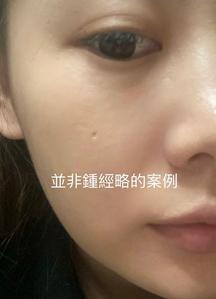
上圖並非鍾經略醫生案例 The scar on the young lady above is not a case by Dr. Chung King Lueh
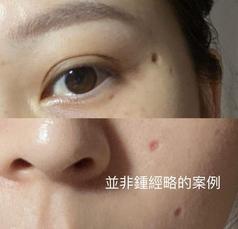
上圖並非鍾經略醫生案例 The scar on the young lady above is not a case by Dr. Chung King Lueh
上圖:激光脫墨後沒有縫合。就算是細小的傷口,都可能造成難看的凹陷的疤痕。
Above: CO2 laser mole removal without suturing. Even a small wound can result in an unsightly depressed scar. The scar on the young lady above is not a case by Dr. Chung King Lueh
患者情況與手術方式
一名 30 歲女性求診,其右側唇紅緣上方(距離唇界 < 0.1 cm)有一顆存在已久且穩定的黑色平坦痣(大小約 0.2 cm × 0.2 cm)。病灶邊緣規則、顏色均勻,且無任何警號症狀(red-flag symptoms)。經臨床評估後,診斷為良性黑色素痣。
為防止復發,外科醫生在局部麻醉、放大鏡(3.5倍)及無影燈輔助下,使用二氧化碳(CO₂)激光進行消融術切除。雖然表面病灶微小且平坦,但黑色素細胞巢(melanocytic nests)已延伸至 0.2 cm 深處。激光成功完成完整切除,且手術視野無出血、無焦炭。醫生隨後選擇以 7-0 溶線及5-0 尼龍線進行一期縫合(Primary closure),而非讓傷口自然癒合(二期癒合)。患者於術後第 10 天拆線,術後 4 個月複查顯示疤痕幾乎不可見。
深層激光創面進行一期縫合的核心優勢
- 預防凹陷性疤痕(Atrophic Scarring): 深度達 0.2 cm 的缺損極難透過二期自癒完全填平。縫合能將深層組織邊緣拉攏對合,防止形成凹陷或坑窪狀疤痕。
- 降低感染風險: 口周區域經常接觸食物、唾液、牙膏及各類液體。即時縫合能封閉傷口床,減少細菌污染及因感染引致的疤痕形成。
- 對抗機械性拉力: 面部表情、進食、打噴嚏及說話都會對嘴唇周圍造成較大的張力。縫合可固定傷口邊緣,抵抗動態拉扯,促進傷口快速且整齊地癒合。
- 有效止血(Hemostasis): 口周組織血管豐富,活動時容易增加術後出血風險。縫合能壓迫局部血管,預防延遲性出血或血腫形成。
- 減輕術後痛楚: 封閉傷口能覆蓋暴露的神經末梢,從而顯著減輕日常清潔、塗抹消毒劑及日常活動時的痛楚。
結論而言,對微小但具一定深度的二氧化碳激光創面進行直接手術縫合,能優化美容效果、防範污染、減少張力拉扯,並確保更舒適的恢復過程。
CO2激光清除深層良性痣後之即時縫合的挑戰
相較於二期癒合,即使是微小而深層的傷口,一期癒合(Primary Intention Healing)在美容和功能上都有著顯著優勢。然而,在CO2激光清除術後立即進行傷口縫合,過程絕不簡單。
要達致無痕修復,關鍵在於精準平衡組織張力、傷口幾何形狀以及外來物的留存量。西方傳統的皮膚科醫生若平時較少處理縫合,可能難以掌握精確的創緣對合(Apposition);而西方傳統的整形外科醫生有時則可能過度處理,放入過多的可吸收及表皮縫線。
外科醫生在落針縫合前,必須仔細評估以下三大關鍵因素。
1. 傷口方向與張力方向(Tension Vectors)
一般而言,醫生會順著自然皮膚褶痕或放鬆皮膚張力線(RSTLs)來定向切口。然而,對於皮膚偏緊且無法進行皮下分離(Undermining)的微小深層圓形創口,這做法未必最佳。
如果硬要順著張力方向對合傷口而引致皮膚嚴重皺褶,縫針留下的痕跡隨時比傷口本身更加明顯。在這類高張力部位,將縫線順著傷口較長的一端排列,往往比強行跟隨皺紋方向效果更好。因此,決定縫針的方向極之考驗醫生的臨床經驗,而非死板地跟從套路。
2. 針數選擇與分層縫合策略
在微小的傷口上縫上過多針數會適得其反,但針數不足又會導致失敗:
- 縫針過多: 若在僅1厘米的微小傷口內放入多條深層可吸收縫線,會殘留過多外來物。這會引發強烈的發炎反應,刺激膠原蛋白過度增生,最終形成厚重的增生性疤痕(Hypertrophic Scar)或針眼痕跡。
- 縫針不足: 相反,縫針太少無法提供足夠拉力來固定創緣,容易導致傷口裂開(Dehiscence)、產生縫隙,甚至留下凹陷性疤痕(Atrophic Scar)。
因此,醫生必須以最少量的針數達致創貼合,同時避免給予組織過多負擔。
3. 靜態與動態區域的縫線緊度
最適宜的縫線緊度會因應解剖位置而有極大分別:
- 靜態區域: 低張力位置只需輕柔地將創緣對合,切忌過分拉緊擠壓組織。
- 動態區域(較高難度的縫合): 高張力位置則需要較穩固的支撐。所以該區的縫合一般需要緊一些。例如唇紅緣(Vermilion Border)附近的傷口會承受持續的肌肉活動;每當病人說話、進食或大張嘴巴時,傷口張力都會顯著改變。若縫得太鬆,傷口會在日常面部表情活動中面臨裂開的風險。但是,在動態區域過度拉緊縫線卻會導致組織缺血、撕裂並留下難看的針痕
因此,我在這裡再強調一次:決定縫針的鬆/緊度,靠的是醫生的臨床經驗,而非死板地跟從套路。
臨床個案處理策略
為了應對唇紅緣深層激光術後傷口的動態張力,我採用了以下分步處置方法:
- 舒緩深層張力: 首先,我使用精細微型手術器械在深層皮下組織縫入一針 7-0 可吸收縫線。單靠這一針便吸收了大部分動態肌肉拉力,同時不會讓小傷口承載過多外來物。
- 閉合表皮層: 接著,由於深層縫線已有效中和了底層拉力,我使用 5-0 尼龍線(Nylon) 閉合表皮層。這步驟只需極小張力,有效防止皮膚受壓過緊或缺血。
- 順應自然褶痕: 最後,我將原本圓形的傷口以垂直方向對齊自然的唇周紋理(俗稱「吸煙者皺紋」)。這種排列方式能將最終的線狀疤痕完美隱藏於嘴唇的自然褶痕之中。
結語
深層 CO2 激光脫墨(脫痣)後的一期縫合,絕非「縫幾針」那麼簡單。完美的修復結果取決於深謀遠慮的策略:醫生必須精準平衡結構支撐與外來物負擔、妥善管理動態張力,並充分尊重細緻的面部解剖結構,方能塑造出近乎無痕的完美效果。
Patient Presentation and Surgical Approach
A 30-year-old female presented with a long-standing, stable, flat black mole above her right vermilion border. Specifically, the lesion measured 0.2 cm × 0.2 cm and sat < 0.1 cm above the border. The lesion had regular margins, homogeneous color, and no red-flag symptoms. Clinical evaluation confirmed a benign nevus.
To prevent recurrence, the surgeon first administered local anesthesia. Next, using 3.5× magnification loupes and shadowless lighting, they precisely ablated the lesion with a CO2 laser. Although the surface lesion was small and flat, the melanocytic nests extended 0.2 cm deep. The laser achieved complete ablation with a bloodless, char-free field. The surgeon then chose primary closure using 7-0 absorbable and 5-0 nylon sutures rather than secondary intention healing. Suture removal occurred on post-operative day 10, and the 4-month follow-up revealed an almost unnoticeable scar.
Key Benefits of Primary Closure for Deep Laser Defect
- Prevents Atrophic Scarring: Spontaneous secondary intention rarely fills a 0.2 cm deep defect completely. Instead, suturing directly brings the deep tissue edges together. Consequently, this simple step prevents a pitted or depressed scar from forming.
- Minimizes Infection Risk: The perioral zone faces constant exposure to food, saliva, toothpaste, and liquids. Immediate suturing seals the wound bed, reducing bacterial contamination and infection-induced scarring.
- Counteracts Mechanical Tension: Facial expressions, eating, yawning, and speaking exert strong tensile forces on the lip area. Suturing stabilizes the wound margins against dynamic stretching to promote rapid, neat healing.
- Ensures Hemostasis: High vascularity in the perioral tissue increases post-operative bleeding risks during movement. Suturing compresses local vessels, preventing delayed bleeding or hematoma formation.
- Reduces Post-Operative Pain: Closing the defect covers exposed nerve endings. This significantly minimizes pain during routine cleansing, antiseptic application, and daily activities.
Ultimately, direct surgical closure offers several key advantages for a small but deep CO2 laser defect. First, it optimizes the final cosmetic outcome. Furthermore, it protects the open wound bed against daily contamination. Additionally, it minimizes mechanical stress from facial movement while ensuring a significantly more comfortable recovery.
Challenges of Immediate Suturing After CO2 Laser Ablation of Deep-Rooted Benign Moles
Primary intention healing offers clear cosmetic advantages over secondary intention, even for small, deep wounds. However, suturing a defect immediately after CO2 laser ablation is rarely simple.
Achieving a seamless result requires a precise balance between tissue tension, wound geometry, and foreign material. While traditional western dermatologists with limited surgical volume may struggle with exact edge alignment, traditional western plastic surgeons sometimes over-engineer the closure with excessive absorbable and epidermal stitches.
A practitioner must evaluate three critical factors before placing the first stitch.
1. Wound Orientation and Tension Vectors
Surgeons typically align incisions along natural skin creases or relaxed tension lines. However, small, deep, circular defects in tight skin present a different challenge because local undermining is often impossible.
If closing a defect against its natural orientation creates extreme puckering, the resulting suture marks will look far worse than the original wound. In these tight areas, placing stitches along the longer axis of the defect often works better than forcing alignment with a crease. Consequently, choosing the right vector requires keen clinical experience rather than rigid rules.
2. Suture Count and Layered Closure Strategy
Placing too many sutures in a compact wound causes real harm, yet placing too few leads to failure.
- Over-suturing: Inserting multiple deep absorbable sutures into a tiny 1 cm defect leaves behind excessive foreign material. As a result, this material triggers intense inflammation, overstimulates collagen production, and causes thick, hypertrophic scarring.
- Under-suturing: Conversely, using too few stitches fails to hold the edges together. This lack of support leads to wound dehiscence, gaping, and depressed atrophic scars.
Therefore, the surgeon must use the fewest stitches possible to secure edge closure without overloading the tissue.
3. Suture Tension in Static vs. Dynamic Zones
Ideal suture tightness changes dramatically depending on the anatomical location.
- Static Zones: Low-tension areas require simple, light edge apposition without squeezing the tissue.
- Dynamic Zones: High-tension areas need firmer support. For example, defects along the vermilion border experience constant movement. Tension shifts significantly every time the patient speaks, eats, or opens their mouth wide.
Furthermore, overtightening stitches in dynamic zones causes ischemia, tissue tearing, and ugly track marks. On the other hand, leaving them too loose risks wound breakdown during normal facial movement.
Clinical Case Strategy
To master these dynamic forces on a deep post-laser defect at the vermilion border, I used a stepped approach:
- Relieve Deep Tension: First, I placed a single 7-0 absorbable suture in the deep dermal layer using micro-instruments. This single stitch absorbed most of the dynamic muscle pull without burdening the small defect with excess foreign material.
- Close the Skin Layer: Next, because the deep stitch neutralized the underlying pull, I closed the epidermal layer with 5-0 Nylon. This step needed very little tension, preventing skin strangulation.
- Align with Natural Creases: Finally, I oriented the circular wound vertically along the natural perioral lines. This placement hid the final scar right inside the lip’s natural folds.
Conclusion
Primary closure after deep CO2 laser ablation is far more than a simple stitch. Success demands a thoughtful strategy. Practitioners must balance structural support against foreign material, manage dynamic tension, and respect delicate facial anatomy to produce a truly invisible scar.