Discussion: Safety Precautions for CO2 Laser Removal of Lower Eyelid Moles
醫學討論:下眼皮CO2激光脫墨的安全預防措施
Case Presentation
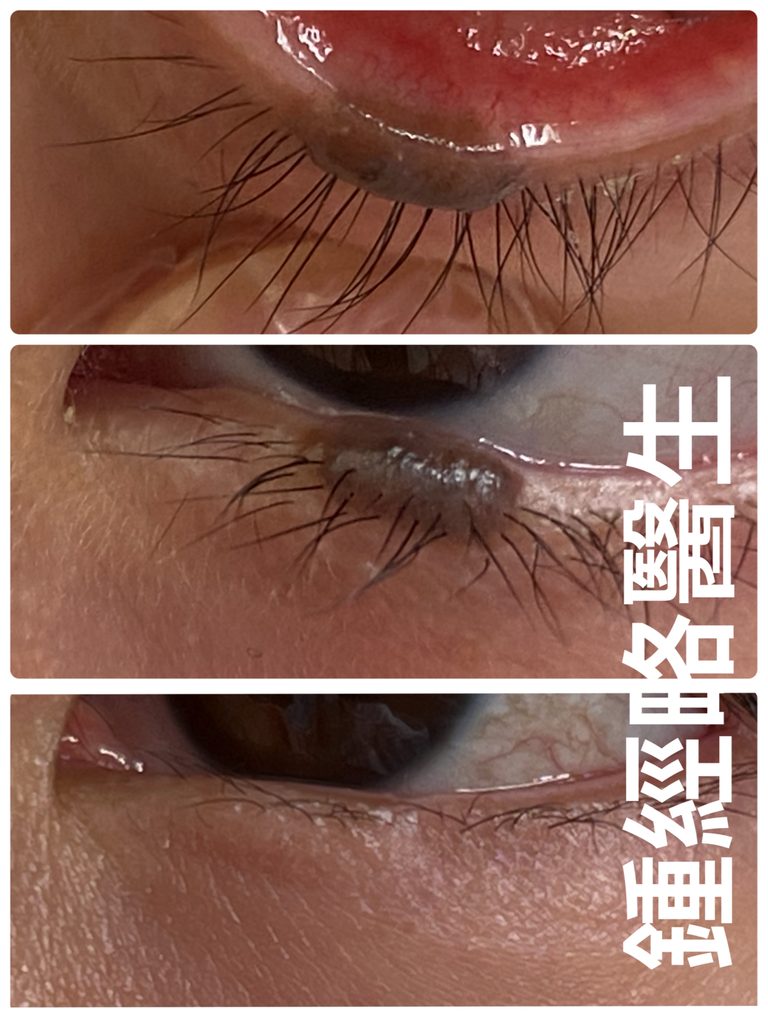
Patient & History A 29-year-old female presented with a dark brown skin lump on her left lower eyelid margin. She has no significant past medical or family history. The lesion had been present since age one and grew slowly and evenly over 28 years. It caused no ulceration, pain, tenderness, itchiness, bleeding, or discharge. However, it partially blocked her visual field. Normal eyelashes continued to grow directly from the lesion.
Physical Examination On examination, the lesion measured 0.4 cm at its widest horizontal axis along the lower eyelid margin and elevated 0.1 cm above the eyelid surface. In addition, melanocytes extended from the lower eyelid skin into the palpebral conjunctiva.
Diagnosis Benign melanocytic nevus.
Procedure We performed Ultrapulse CO2 laser ablation to vaporize the nevus. The Ultrapulse setting minimizes peripheral thermal damage, stops bleeding instantly, and leaves minimal charring. Consequently, we easily visualized and completely vaporized the deep nevus nests.
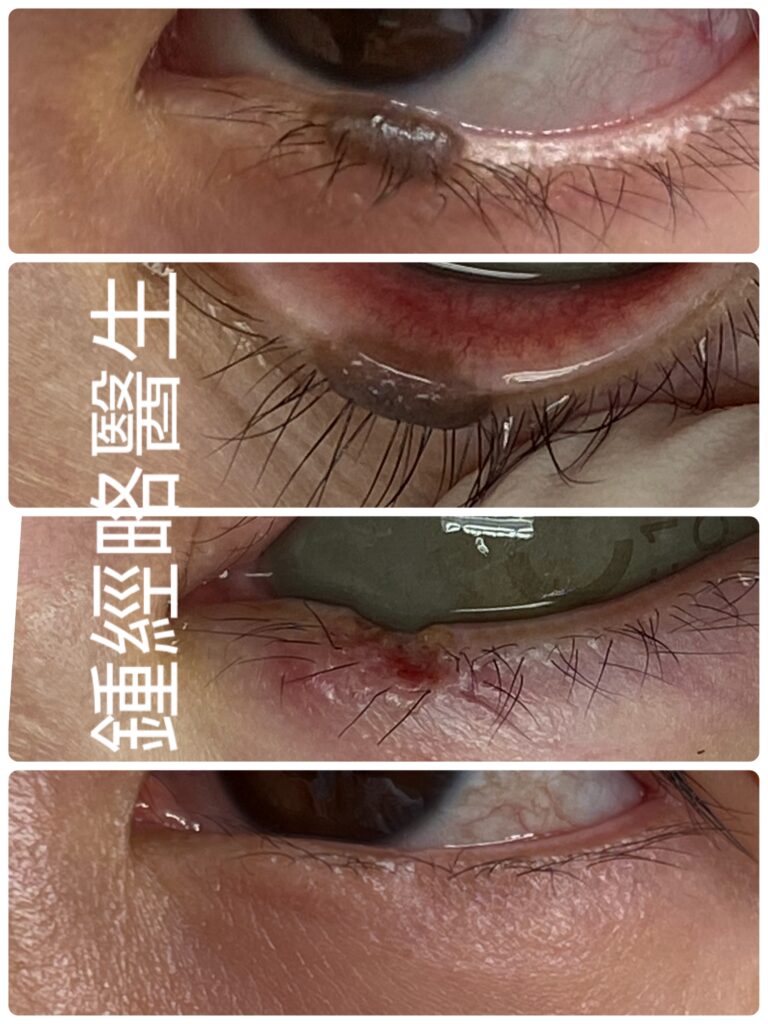
Result & Outcome Following laser ablation, the wound showed zero bleeding or charring. Although the laser left a slight surface depression, it spared the underlying tarsal plate and periocular muscles. Therefore, we chose not to suture the defect and allowed it to heal by secondary intention instead.
The wound healed completely within two to three weeks. Over the subsequent few months, the depressed scar gradually elevated to 90% of the surrounding skin level. Ultimately, the remaining scar is barely visible.
下眼皮邊緣激光脫痣之臨床病例報告
患者與病史
一名 29 歲女性求診,其左下眼瞼邊緣長有一粒深褐色皮膚腫塊。患者無顯著既往病史或家族病史。該病變自 1 歲起出現,並在 28 年間緩慢且均勻地增大。腫塊未引起潰瘍、疼痛、壓痛、瘙癢、出血或分泌物,但部分遮擋了患者的視野。正常睫毛繼續直接從病變處生長。
理學檢查
檢查顯示,該病變沿下眼瞼邊緣的最寬水平軸為 0.4 厘米,高出眼瞼表面 0.1 厘米。此外,色素細胞(黑色素細胞)從下眼瞼皮膚延伸至瞼結膜。
診斷
良性黑色素細胞痣(良性痣)。
手術過程
我們使用了超脈衝二氧化碳(CO₂)激光汽化切除術來消除該痣。超脈衝設定能最大限度地減少周邊熱損傷,即時止血,且僅產生極少炭化。因此,我們能夠清晰地觀察並徹底汽化深層的痣細胞巢。
結果與預後
激光汽化切除後,傷口無出血或炭化現象。雖然激光留下了一道輕微的表面凹陷,但未損傷深層的瞼板及眼瞼周圍肌肉。因此,我們決定不進行縫合,讓傷口以二期癒合方式自行修復。
傷口在二至三星期內完全癒合。在隨後的數個月內,凹陷的疤痕逐漸平復至周圍皮膚水平的 90%。最終,殘留的疤痕幾乎不可見。
Discussion: Safety Precautions for CO2 Laser Removal of Lower Eyelid Moles
Performing CO2 laser removal near the eye carries severe risks. Specifically, scattered laser radiation can permanently damage your vision, while excess heat can burn delicate eyelid structures.
Core Safety Precautions
1. Ocular Protection
- Insert Metal Corneal Shields: Standard safety goggles or eye pads cannot protect your eyes during this procedure. Therefore, the clinician must place surgical-grade metal shields directly over eyes (corneal shield) before firing the laser.
- Use Non-Reflective Surfaces: These eye shields need a matte finish. Otherwise, specular reflections can bounce the 10,600 nm infrared beam into unintended tissue.
2. Eyelid Margin & Anatomical Safety
- Protect Meibomian Glands: The eyelid margin houses critical oil glands. Consequently, high heat can destroy these glands permanently and cause chronic dry eye syndrome.
- Prevent Lid Deformation: Excessive tissue ablation causes scar tissue to contract. As a result, the eyelid can pull inward or outward, which disrupts normal blinking. To prevent this, clinicians use tight focal spots with short dwell times.
- Shield the Tear Duct: If the mole lies near the inner corner, the operator must carefully isolate the lacrimal punctum. This step prevents tear duct scarring and persistent tearing.
3. Fire and Anesthesia Hazards
- Control Anesthetics: Doctors typically inject lidocaine with epinephrine locally. An overdose of local anesthetic induces excessive vasoconstriction, which can trigger ischemic skin necrosis in the eyelid.
- Manage Oxygen Levels: Staff must use fire-resistant drapes and shut off supplemental oxygen nearby, because high oxygen levels create immediate flash-fire risks.
- Drape Moist Gauze: In addition, the team surrounds the treatment area with damp gauze to trap stray laser energy safely.
4. Smoke Plume Safety
- Evacuate Vaporized Particles: The laser vaporizes tissue into a toxic smoke plume.
- Position Smoke Vacuum: Therefore, the operator positions a HEPA-filtered smoke evacuator within two inches of the spot.
- Wear High-Filtration Masks: Furthermore, medical personnel wear professional surgical mask throughout the entire procedure.
Post-Procedure Care
- Apply Ophthalmic Ointments: Standard skin creams irritate the eye. Instead, doctors prescribe eye-safe antibiotic ointments for healing.
- Avoid Direct Sun Exposure: UV light causes dark spots on fresh skin. Consequently, strict sun avoidance prevents post-inflammatory hyperpigmentation.
- Monitor Eyelid Healing: Finally, patients must watch closely for infection, lingering redness, or abnormal eyelid pulling during recovery.
Conclusion
Whether mole removal surgery on the eyelid and eyelid margin achieves flawless outcomes—while avoiding unacceptable permanent scarring and minimizing the risk of recurrence—hinges on two critical factors: whether the mole is thoroughly excised, and whether damage to surrounding healthy tissue can be precisely avoided during complete removal. Furthermore, deciding whether to perform primary closure (Direct Closure) or allow the wound to undergo secondary intention healing (Secondary Intention Healing) relies entirely on the attending physician’s extensive clinical experience and accurate judgment.
Therefore, physicians performing such procedures should possess cutting-edge knowledge in both clinical dermatology and aesthetic medicine (preferably holding a Master’s degree or above, rather than relying solely on traditional Western dermatology training). In fact, due to the allocation of healthcare resources, traditional dermatology training programs in many countries and regions often lack high-quality, practical training in pure aesthetic medicine. Patients are strongly advised to review a doctor’s real clinical mole removal cases prior to surgery to ensure both procedure safety and optimal aesthetic results.
醫學討論:下眼皮CO2激光脫墨的安全預防措施
在眼部附近進行二氧化碳(CO₂)激光切除術具有極高風險。具體而言,散射的激光輻射可對視力造成永久損害,而過高的熱力則會灼傷纖細的眼瞼結構。
核心安全預防措施
- 眼部防護
- 放置金屬角膜保護罩:一般安全護目鏡或眼罩在程序期間無法保護眼睛。因此,臨床醫生在發射激光前,必須在眼球表面直接放置手術級金屬保護罩。
- 使用無反射表面:眼部保護罩必須具備霧面處理。否則,鏡面反射會將 10,600 nm 的紅外線激光光束彈射至非預期組織。
- 眼瞼邊緣及解剖結構安全
- 保護瞼板腺:眼瞼邊緣包含關鍵的油脂腺體。因此,高熱會永久破壞這些腺體,並引致慢性乾眼症。
- 預防眼瞼變形:過度的組織汽化會導致疤痕組織收縮。結果可致眼瞼內翻或外翻,從而破壞正常眨眼功能。為預防此情況,臨床醫生會採用緊密焦點及短停留時間。
- 防護淚管:若痣部位靠近內眼角,操作者必須小心隔離淚小點。此步驟可預防淚管形成疤痕及持續流眼淚。
- 火災及麻醉風險
- 管制麻醉藥劑:醫生通常在局部注射含腎上腺素的利多卡因(Lidocaine)。過量注射,會引致血管過度及長期收縮,導致眼皮皮膚局部壞死。
- 管理氧氣濃度:醫護人員必須使用防火手術巾,並關閉附近的補充氧氣,因為高濃度的氧氣會帶來即時暴燃(Flash-fire)風險。
- 鋪設濕紗布:此外,團隊會以濕紗布圍繞治療區域,以安全吸收散射的激光能量。
- 煙霧安全
- 抽走汽化微粒:激光會將組織汽化成有毒煙霧。
- 置放抽煙機:因此,操作者會將配備 HEPA 過濾網的煙霧抽吸器放置於距離治療點兩吋以內的範圍。
- 佩戴高過濾口罩:此外,醫護人員在整個手術過程中均須佩戴醫療級/手術級口罩。
術後護理
- 塗抹眼用軟膏:一般的皮膚軟膏會刺激眼睛。因此,醫生會處方眼部安全的抗生素眼膏以促進癒合。
- 避免陽光直射:紫外線會使新生的皮膚出現黑斑。因此,嚴格防曬可預防發炎後色素沉著(PIH)。
- 監測眼瞼癒合過程:最後,患者在康復期間必須密切留意有無感染、持續發紅或眼瞼異常拉扯的情況。
結論
眼皮及眼瞼邊緣脫墨手術能否達到完美效果,同時避免留下不可接受的永久性疤痕或降低復發風險,關鍵在於:墨痣的切割是否徹底,以及能否在完整切除的同時精密避開周邊健康組織。此外,究竟該選擇一期縫合(Direct Closure)還是二期癒合(Secondary Intention Healing),完全仰賴主診醫生豐富的臨床經驗與精準判斷。
因此,執行此類手術的醫生應具備最前沿的臨床皮膚科與美容醫學專業知識(建議達碩士或以上資歷,而非僅受限於傳統西方皮膚專科訓練)。事實上,許多國家與地區的傳統皮膚科培訓受限於醫療資源分配,在純粹美容醫學方面的臨床訓練質素極為匱乏。強烈建議患者在術前務必參考醫生的真實脫墨案例,以保障手術的安全性與最終的美觀成果。