
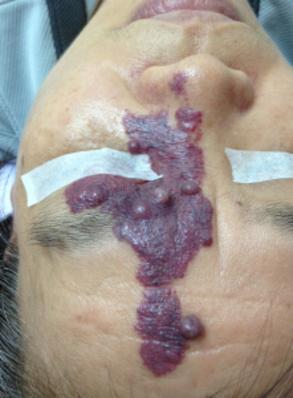
激光治療之前,紅酒痣呈深紅色。
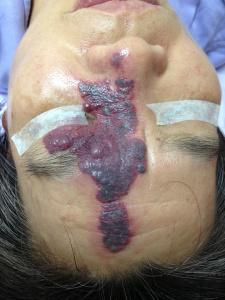
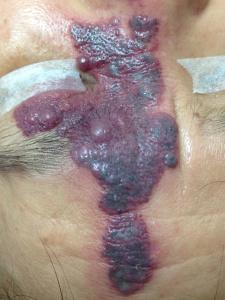
治療期間,患處紅腫瘀黑,隨後結焦脫落,但不影響其療效。
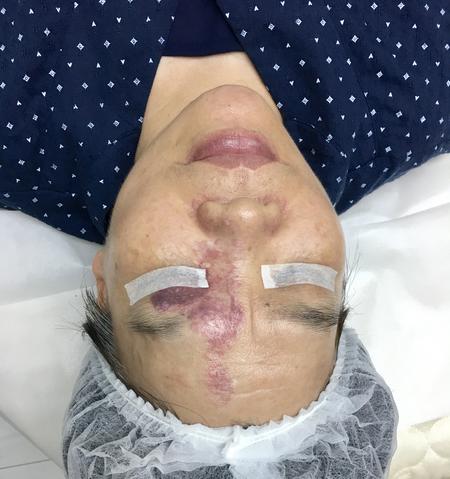
經過多次治療之後,就見到效果
論文:長脈衝 1064 nm 雷射在亞洲皮膚酒紅斑治療中的應用
引言
酒紅斑(Port Wine Stain, PWS)是一種先天性血管畸形,表現為皮膚上的紅色至紫色斑塊。在亞洲患者中,治療更具挑戰性,因為黑色素含量較高,增加了炎症後色素沉著(PIH)的風險。雖然脈衝染料雷射(PDL, 585–595 nm)在淺膚色人群中是金標準,但長脈衝 1064 nm Nd:YAG 雷射因其更深的穿透力及較低的黑色素吸收,已成為亞洲皮膚的重要替代方案。
作用機制
- 波長(1064 nm):紅外光能深入真皮層,作用於擴張的毛細血管,同時保護表皮。
- 脈衝時間(長脈衝):與較大血管的熱鬆弛時間相匹配,能夠控制性凝固血管而不致破裂。
- 選擇性光熱分解:血紅素吸收雷射能量,導致血管壁受損、血栓形成並逐漸被吸收。
臨床應用
- 酒紅斑(PWS):長脈衝 1064 nm 雷射特別適合厚實、結節型或對 PDL 反應不佳的病灶。
- 亞洲皮膚類型(Fitzpatrick III–V):比短波長(532 nm、595 nm)更安全,因為 1064 nm 較少被表皮黑色素吸收,降低 PIH 風險。
優點
- 更深穿透力:對肥厚或增生型酒紅斑病灶有效。
- 較低黑色素吸收:在亞洲皮膚中更安全,減少表皮損傷。
- 美容效果改善:臨床報告顯示多次治療後病灶逐漸淡化,結痂與暫時性瘀斑可自行消退,不留長期損傷。
- 多功能性:可與其他血管雷射結合,治療表淺與深層血管。
挑戰
- 需多次治療:清除是漸進的,臨床經驗顯示需多次療程。
- 暫時性副作用:紅腫、腫脹及結痂常見,但通常不留疤痕。
- PIH 風險:在亞洲皮膚中仍可能發生,若能量過高或冷卻不足。
- 反應差異:部分肥厚或深色病灶即使多次治療仍可能頑固。
結論
長脈衝 1064 nm Nd:YAG 雷射是治療亞洲皮膚酒紅斑的重要工具。其深層穿透力及較低的黑色素吸收,使其比短波長雷射更安全、更有效。臨床經驗顯示需多次治療才能逐步改善,且副作用多為暫時性。最佳療效需保守能量設定、適當冷卻及嚴格防曬。
亞洲皮膚使用長脈衝 1064 nm Nd:YAG 雷射治療酒紅斑(PWS)的參數指南
(參考鍾經略醫師的臨床經驗)
酒紅斑治療參數表
| 病灶厚度 / 類型 | 建議脈衝時間 | 能量密度 (Fluence) | 光斑大小 | 預期臨床效果 | 亞洲皮膚注意事項 |
|---|---|---|---|---|---|
| 表淺、平坦型 PWS(粉紅或紅色斑塊) | 5–10 ms | 80–100 J/cm² | 3–5 mm | 2–3 次治療後逐漸淡化 | 保守設定以降低 PIH 風險 |
| 中度深度 PWS(紅紫色、稍微隆起) | 10–15 ms | 100–120 J/cm² | 4–6 mm | 3–5 次治療後明顯淡化 | 必須冷卻;注意結痂反應 |
| 增厚 / 結節型 PWS(深紫色、肥厚型) | 15–20 ms | 120–150 J/cm² | 5–7 mm | 5 次以上逐步改善 | 需較高能量;有瘀斑與 PIH 風險 |
| 頑固病灶(PDL 治療後反應差) | 15–20 ms | 110–140 J/cm² | 4–6 mm | 部分清除;可能需合併治療 | 可與 PDL 順序使用,PDL 處理表淺血管 |
臨床要點
- 冷卻:必須使用接觸式冷卻或冷風保護表皮並減少疼痛。
- 多次療程:清除是漸進的,大多數患者需 3–6 次治療。
- 副作用:常見暫時性紅腫、結痂或輕微瘀斑,但通常不留疤痕。
- PIH 風險:亞洲皮膚仍可能出現 PIH,需保守能量並嚴格防曬。
- 合併治療:PDL 可用於表淺血管,Nd:YAG 用於深層血管。
✅ 總結:在亞洲患者的酒紅斑治療中,長脈衝 1064 nm Nd:YAG 雷射比短波長雷射更安全,能提供更深的穿透力。根據病灶厚度調整脈衝時間與能量,並搭配冷卻與防曬,可在降低 PIH 風險的同時達到良好治療效果。
Essay: Long‑Pulse 1064 nm Laser in the Treatment of Port Wine Stain in Asian Skin
Introduction
Port wine stain (PWS) is a congenital vascular malformation presenting as reddish to purplish patches on the skin. In Asian patients, treatment is complicated by higher melanin content, which increases the risk of post‑inflammatory hyperpigmentation (PIH). While pulsed dye laser (PDL, 585–595 nm) is the gold standard in lighter skin types, the long‑pulse 1064 nm Nd:YAG laser has become an important alternative for Asian skin because of its deeper penetration and reduced melanin absorption.
Mechanism of Action
- Wavelength (1064 nm): Infrared light penetrates deeply into the dermis, targeting dilated capillaries while sparing the epidermis.
- Pulse Duration (long‑pulse): Matches the thermal relaxation time of larger vessels, allowing controlled coagulation without rupture.
- Selective Photothermolysis: Hemoglobin absorbs the laser energy, leading to vessel wall damage, thrombosis, and gradual resorption.
Clinical Applications
- Port Wine Stain (PWS): Long‑pulse 1064 nm laser is particularly useful for thicker, nodular, or resistant lesions that do not respond well to PDL.
- Asian Skin Types (Fitzpatrick III–V): Safer than shorter wavelengths (532 nm, 595 nm) because 1064 nm is less absorbed by epidermal melanin, reducing PIH risk.
Advantages
- Deeper Penetration: Effective for thickened or hypertrophic PWS lesions.
- Lower Melanin Absorption: Safer in Asian skin, minimizing epidermal damage.
- Improved Cosmetic Outcomes: Case reports show progressive lightening after multiple treatments, with crusting and temporary bruising resolving without long‑term damage.
- Versatility: Can treat both superficial and deeper vascular components when combined with other lasers.
Challenges
- Multiple Sessions Required: Clearance is gradual; several treatments are needed, as highlighted in clinical practice.
- Transient Side Effects: Redness, swelling, and crusting are common during recovery but typically resolve without scarring.
- Risk of PIH: Still possible in Asian skin if fluence is too high or cooling is inadequate.
- Variable Response: Some PWS lesions, especially hypertrophic or very dark ones, may be resistant.
Conclusion
The long‑pulse 1064 nm Nd:YAG laser is a valuable tool in the treatment of port wine stain in Asian skin. Its deeper penetration and reduced melanin absorption make it safer and more effective than shorter‑wavelength lasers in this population. Clinical experience shows that multiple treatments are necessary, with gradual improvement and temporary side effects such as redness and crusting. Optimal results require conservative fluence, epidermal cooling, and strict sun protection.
Here’s a parameter guideline table for using the long‑pulse 1064 nm Nd:YAG laser in treating port‑wine stain (PWS) in Asian skin, with reference to Dr. Chung King Lueh’s clinical experience
Treatment Parameter Guide for Port‑Wine Stain in Asian Skin
| Lesion Thickness / Type | Recommended Pulse Duration | Fluence (Energy Density) | Spot Size | Expected Clinical Outcome | Notes for Asian Skin |
|---|---|---|---|---|---|
| Superficial, flat PWS (pink‑red patches) | 5–10 ms | 80–100 J/cm² | 3–5 mm | Gradual lightening after 2–3 sessions | Conservative settings to reduce PIH risk |
| Moderate depth PWS (red‑purple, slightly raised) | 10–15 ms | 100–120 J/cm² | 4–6 mm | Noticeable fading after 3–5 sessions | Cooling essential; monitor for crusting |
| Thickened / nodular PWS (dark purple, hypertrophic) | 15–20 ms | 120–150 J/cm² | 5–7 mm | Progressive improvement over 5+ sessions | Higher fluence needed; risk of bruising and PIH |
| Resistant lesions (previously treated with PDL, poor response) | 15–20 ms | 110–140 J/cm² | 4–6 mm | Partial clearance; may require combination therapy | Sequential use with PDL for superficial vessels |
Key Clinical Notes
- Cooling: Contact cooling or cold air is mandatory to protect epidermis and reduce pain.
- Multiple Sessions: Clearance is gradual; most patients need 3–6 treatments.
- Side Effects: Temporary redness, swelling, crusting, or mild bruising are common but resolve without scarring.
- PIH Risk: Still possible in Asian skin; conservative fluence and strict sun protection are critical.
- Combination Therapy: PDL may be used for superficial vessels, Nd:YAG for deeper ones.
✅ Summary: In Asian patients with port‑wine stain, the long‑pulse 1064 nm Nd:YAG laser offers deeper penetration and safer treatment compared to shorter wavelengths. Careful adjustment of pulse duration and fluence based on lesion thickness, combined with cooling and sun protection, ensures effective outcomes while minimizing PIH risk.