
墨/痣的分類是根據痣細胞在皮膚那個層次(深度)去決定。簡單來說,就係根據墨/痣的「根」的深度來分類。
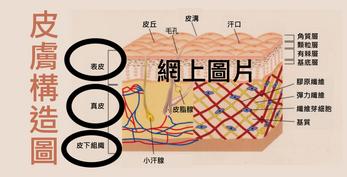
我們的皮膚分開做表皮,真皮,以及皮下組織三個層次。
(以下乃皮膚組織學結構圖)
Moles are categorized based on the depth at which the mole cells (melanocytes) reside within the skin. Simply put, it’s classified according to how deep the “root” of the mole extends.
Our skin is made up of three layers: the epidermis (outer layer), the dermis (middle layer), and the subcutaneous tissue (deepest layer).
(Following is a histological diagram of the structure of skin)
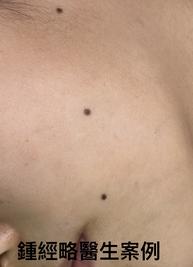
1. 第一種是交界痣,屬於最淺層的墨痣,即係墨痣的根比較淺。痣細胞生長在表皮與真皮中間。因為細胞位於淺層位置,所以這種墨痣通常平坦及細小但係顏色比較深色。
(以下乃典型的交界痣)
1. The first type is junctional nevus, which is the most superficial type of mole—meaning its “roots” lie closer to the surface. The nevus cells grow between the epidermis and the dermis layers of the skin. Because the cells are located near the surface, these moles are usually flat, small, and tend to appear darker in color.
(Below is how typical junctional nevi look )
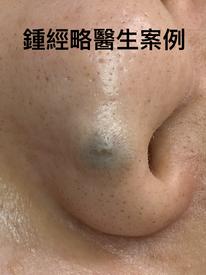
2. 第二種是真皮痣又稱作真皮內痣,係比較淺色的墨痣,這種墨痣的根通常比較深。這是因為痣細胞位於皮膚比較深層的地方,即是真皮以內或以下的位置。因為表皮覆蓋在痣細胞的上面(而表皮又沒有顏色),所以看上去比較淺色,有時候甚至看上去是沒有顏色的(俗稱「肉墨」)。這些無色或淺色的墨痣通常凸起來,有時候有毛髮生長出來。
(以下乃典型的真皮內痣)
2. The second type is dermal nevus, also known as an intradermal nevus. These moles tend to be lighter in color, and their roots generally lie deeper within the skin. That’s because the nevus cells are located in the deeper layer of the skin—the dermis or even beneath it. Since the outer skin layer (the epidermis) lies above these pigmented cells—and because the epidermis itself is semi-transparent—the mole often appears lighter or, in some cases, colorless.
These lighter or colorless moles are usually raised above the skin surface, and sometimes have hair growing from them.
(Below is how a typical intradermal nevus looks)
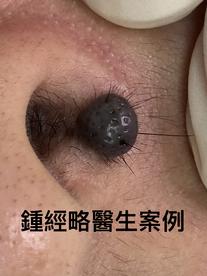
3. 第三種就是複合痣。這種墨痣的根通常都係比較深。係交界痣,同埋真皮內痣的混合體。顏色比起真皮內痣較深。因為部份痣細胞位於較淺層位置(即表皮與真皮層的交界位置)。而另外一部份的痣細胞就位於真皮層以內或以下。有時候會有毛髮長出來。
(以下乃典型的複合痣)
3. The third type is compound nevus. This type of mole usually has deeper roots and is a combination of a junctional nevus and a dermal (intradermal) nevus. It tends to appear darker than a dermal nevus because some of the nevus cells are located closer to the skin surface. Meanwhile, other nevus cells are found deeper within or below the dermis. Sometimes these moles have hairs growing from them.
(Below is how a typical compound nevus looks )
除了交界痣之外,其他兩種墨痣的根都是比較深層。
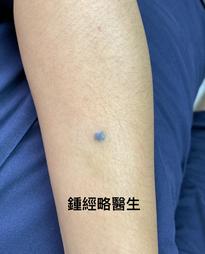
另外還有「藍色痣」,這其實係一種其根部十分之深的墨痣。因為痣細胞生在皮膚很深很深的地方,加上光線折射,所以看上去呈現藍色。藍色痣的「根」當然係深黑色的啦(注:並非藍色)。此外還有朱砂痣,其實係血管瘤,裏面沒有痣細胞,所以並非屬於痣的一種。
(以下乃典型的藍色痣,肉眼看上去是藍色的)
In summary, aside from junctional nevi, the other two types of moles have deeper roots within the skin.
There’s also a type called the blue nevus, which is a mole with roots located very deep in the skin. Due to the extreme depth of the nevus cells and the way light is scattered and refracted, these moles appear blue to the naked eye. However, the roots themselves are actually dark black (not blue).
Additionally, there’s a type called red mole in Chinese , but this is actually a hemangioma—a vascular growth that contains no nevus cells—so it’s not classified as a mole. It is also called cherry angioma.
(Below is a typical blue nevus, which appears blue to the naked eye )
總結:墨痣並非表面那麼簡單,其根部深淺千變萬化,例如表面顏色淺的墨痣有時候它的根部十分之深(尤其是藍痣,顏色越淺,根部越深),唯有受過皮膚學訓練的醫生才能準確識別,避免誤判導致疤痕或復發。非醫護很可能缺乏這類判斷力。
Conclusion: Understanding mole types—especially complex ones like blue nevus or dermal nevus—requires dermatological insight. A mole that appears light in colour on the surface may deceptively harbour deep-seated pigment cells, and if the wrong technique is employed, it can lead to extensive scarring or incomplete removal.. A beautician may overlook these distinctions, while a doctor with advanced credentials won’t.