
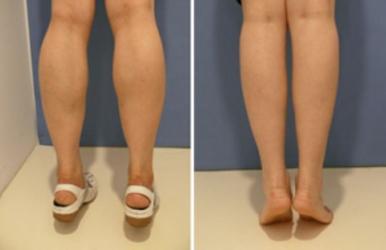
肉毒桿菌注射前後比較。
瘦小腿是 Botox 其中的一個主要的用途。時下潮流興纖細小腿,但是亞洲人(尤其是日本人),女性的小腿就特別發達。
小腿肌肉的解剖結構。
source: http://hk.apple.nextmedia.com/supplement/retails/art/20090721/13009502
Botox瘦小腿,三個月後最靚
鍾經略醫生示範以肉毒桿菌素注射Botox瘦小腿
本頁之所有圖片來自互聯網,而且未經核實。
Botox肉毒桿菌素注射到小腿肌肉後令粗壯發達的肌肉收細,小腿變得纖細。
肉毒桿菌注射前後比較。
以下文章總結了「美容醫學碩士」課程及「臨床皮膚科碩士」課程中關於肉毒桿菌注射小腿的教學內容。
肉毒桿菌瘦腿(小腿變幼)主要針對腓腸肌,這是小腿的主要肌肉群,以達到更纖細的腿型。理解解剖結構對安全有效的治療至關重要。
🦵 腓腸肌解剖
- 位置: 位於小腿後側區,形成明顯的小腿輪廓。
- 起點: 兩個肌頭——內側頭起自股骨內側髁上方,外側頭起自股骨外側髁。
- 止點: 兩頭與比目魚肌融合形成跟腱,止於跟骨。
- 結構:
- 內側頭 – 體積較大,較表淺,對小腿肌肉隆起貢獻最大。
- 外側頭 – 體積較小,形成外側輪廓。
- 功能: 足底屈(腳尖向下),並輔助膝關節屈曲。
- 神經支配: 脛神經(坐骨神經分支)。
- 臨床提示: 腓腸肌肥大(由遺傳、運動或長期穿高跟鞋造成)會導致小腿粗壯,女性患者常希望獲得更纖細的腿型。
💉 肉毒桿菌瘦小腿機制
- 作用: A 型肉毒桿菌阻斷神經肌肉接點的乙醯膽鹼釋放。
- 效果: 收縮減弱 → 廢用性萎縮 → 肌肉數週內縮小。
- 結果: 小腿更纖細、更修長。
⚠️ 注射的解剖學考量
- 目標: 腓腸肌肌腹(內側與外側頭)。
- 安全區域: 肌腹中段,避免靠近神經血管結構(膕窩、脛神經、後脛動脈)。
- 誤注射風險:
- 擴散至比目魚肌 → 過度無力、步態障礙。
- 擴散至脛神經 → 神經性症狀。
- 過度削弱 → 走路、爬樓梯或跑步困難。
📋 臨床技術要點
- 注射點: 每條腿通常 20-30 點,均勻分佈於肌腹。
- 深度: 肌肉內,中段位置。
- 針具: 細針(30 號)以提高精準度。
- 劑量: 因人而異(常見每條小腿約 100 單位)。
🔎 風險與取捨
- 功能改變: 推蹬力下降、小腿疲勞。
- 美學風險: 不對稱、不規則輪廓、反常性突起。
✅ 總結: 肉毒桿菌瘦小腿主要透過在腓腸肌內側與外側頭進行肌肉內注射。掌握其起點、止點、神經支配及周邊結構,對於獲得理想美學效果並避免步態障礙或神經損傷至關重要。
The following essay summarizes the teaching on leg slimming with Botox injections, as presented in the MSc Aesthetic Medicine and MSc Clinical Dermatology programs
Botox slimming of the legs (calf reduction) targets the gastrocnemius muscle, the main bulk of the calf, to achieve a slimmer contour. Understanding the anatomy is essential for safe and effective treatment.
🦵 Gastrocnemius Muscle Anatomy
- Location: Posterior compartment of the lower leg, forming the prominent calf contour.
- Origin: Two heads — medial head from the posterior femur above the medial condyle, lateral head from the lateral condyle of the femur.
- Insertion: Both heads join with the soleus muscle to form the Achilles tendon, inserting into the calcaneus (heel bone).
- Structure:
- Medial head – larger, more superficial, contributes most to calf bulk.
- Lateral head – smaller, lateral contour.
- Function: Plantar flexion of the foot (pointing toes downward), assists in knee flexion.
- Innervation: Tibial nerve (branch of the sciatic nerve).
- Clinical note: Hypertrophy of the gastrocnemius (from genetics, athletics, or habitual high‑heel use) can cause bulky calves, especially common in women seeking a slimmer leg profile.
💉 Botox Mechanism in Calf Slimming
- Action: Botulinum toxin type A blocks acetylcholine release at the neuromuscular junction.
- Effect: Reduced contraction → disuse atrophy → muscle volume decreases over weeks.
- Result: Slimmer, more tapered lower leg contour.
⚠️ Key Anatomical Considerations for Injection
- Target: Gastrocnemius belly (medial and lateral heads).
- Safe zones: Mid‑belly of the muscle, avoiding neurovascular structures (popliteal fossa, tibial nerve, posterior tibial vessels).
- Risks if misplaced:
- Diffusion into soleus → excessive weakness, gait disturbance.
- Spread near tibial nerve → neuropathic symptoms.
- Over‑weakening → difficulty walking, climbing stairs, or running.
📋 Clinical Technique Highlights
- Injection points: Typically 20-30 per leg, distributed evenly across the muscle belly.
- Depth: Intramuscular, mid‑belly.
- Needle: Fine (30 gauge) for precision.
- Dosage: Varies (commonly 100 units per calf, adjusted per patient).
🔎 Risks & Trade‑offs
- Functional changes: Reduced push‑off strength, calf fatigue.
- Aesthetic risks: Asymmetry, irregular contour, paradoxical bulging.
✅ Summary: Botox calf slimming involves intramuscular injections into the medial and lateral heads of the gastrocnemius. Proper anatomical knowledge—origin, insertion, innervation, and surrounding structures—is critical to achieve aesthetic results while minimizing risks such as gait disturbance or nerve injury.