
🩺 Clinical Case Report: One Hand Two Feet Syndrome
Patient Information
- Age/Sex: 50‑year‑old male
- Occupation: Security guard
- Past Medical History: Long history of tinea pedis (“Hong Kong Foot”)
- Family/Health History: Insignificant
- Exposure: No occupational contact with water or irritants
Presenting Complaint
- Duration: 6 months
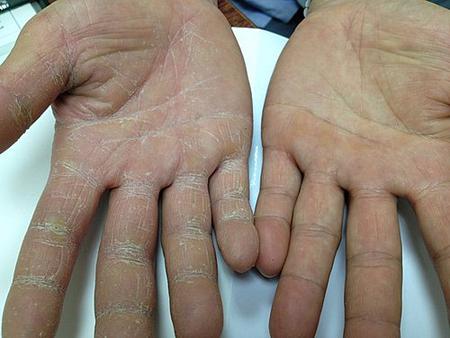
- Symptoms: Persistent itching and scaling of the right hand
Clinical Findings
- Hand involvement:
- Only right hand affected (unilateral, dominant hand)
- Diffuse erythema, hyperkeratosis, and scaling
- More pronounced changes in palmar creases
- Nail changes:
- Onycholysis
- Subungual hyperkeratosis
- Yellow‑brown discoloration of keratinaceous debris
- Feet involvement:
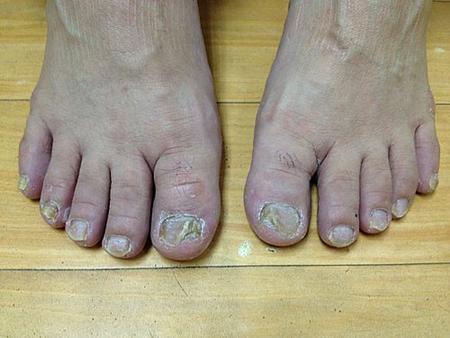
- Bilateral tinea pedis
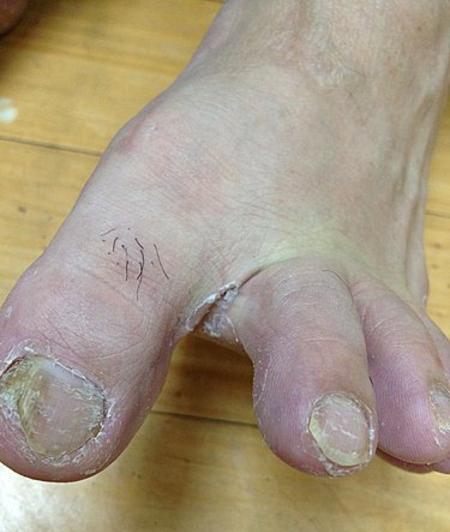
- Big toenail shows distal and lateral subungual onychomycosis (DLSO), beginning at hyponychial area/nail fold and extending subungually
Diagnosis
- Clinical diagnosis: Keratinizing fungal infection consistent with “One Hand Two Feet Syndrome” (unilateral tinea manuum associated with bilateral tinea pedis and toenail onychomycosis).
Management
- Initial treatment:
- Oral antifungal therapy (2 weeks)
- Topical antifungal therapy
- Response:
- Improvement noted after 2 weeks
- Patient did not return for follow‑up despite warning of high relapse risk
Discussion
Excision is not relevant here, but antifungal therapy is essential. The difficulty lies in patient compliance: once symptoms improve, patients often discontinue treatment prematurely. Because fungal reservoirs persist in toenails and feet, reinfection of the hand is common.
Key points:
- Relapse risk: Very high due to untreated toenail and foot infection.
- Unilateral involvement: Seen in ~50% of cases, usually dominant hand.
- Importance of adherence: Long‑term antifungal therapy and follow‑up are crucial to eradicate infection and prevent recurrence.
- Patient education: Emphasize that improvement does not equal cure; fungi in toenails act as a reservoir.
Conclusion
This case illustrates the classic presentation of One Hand Two Feet Syndrome. Successful management requires not only antifungal therapy but also strict patient adherence and treatment of all fungal reservoirs (feet and nails). Without this, recurrence is inevitable, as demonstrated by the patient’s failure to follow up after initial improvement.
🩺 臨床病例報告:一手兩足症候群
病人資料
- 年齡/性別: 50 歲男性
- 職業: 保安員
- 既往病史: 長期患有足癬(俗稱「香港腳」)
- 家族史/健康史: 無顯著異常
- 接觸史: 工作中無接觸水或其他刺激物
主訴
- 病程: 半年
- 症狀: 右手持續瘙癢及脫屑
臨床檢查結果
- 手部病灶:
- 僅右手受累(單側,為慣用手)
- 瀰漫性紅斑、角化過度及脫屑
- 掌紋處病變更為明顯
- 指甲改變:
- 甲板分離(甲床剝離)
- 甲下角化過度
- 黃褐色角質性碎屑沉積
- 足部病灶:
- 雙足均有足癬感染
- 大趾甲呈現 遠端及外側甲下型甲癬(DLSO),由甲下角質層或甲摺起始,向甲下延伸,逐漸向中央及內側累及甲板
- 此型甲癬常與足癬並存
診斷
- 臨床診斷: 角化性真菌感染,符合 「一手兩足症候群」(單側手癬合併雙足癬及趾甲甲癬)。
治療經過
- 初始治療:
- 口服抗真菌藥物(2 週)
- 外用抗真菌藥物
- 療效:
- 兩週後手部病灶改善
- 病人未再回診,儘管已被告知復發風險極高
討論
抗真菌治療為必要,但治療困難主要在於 病人依從性不足:症狀改善後常自行停藥。由於趾甲及足部仍存在真菌感染,手部極易再次受累。
重點:
- 復發風險高: 未治療的趾甲及足部真菌為持續感染來源。
- 單側受累: 約 50% 病人呈單側手癬,通常為慣用手。
- 依從性重要: 長期抗真菌治療及定期隨訪是根治的關鍵。
- 病人教育: 必須強調「症狀改善 ≠ 病癒」,趾甲真菌是主要感染庫。
結論
此病例展現了典型的 一手兩足症候群。成功治療不僅依賴抗真菌藥物,更需病人嚴格遵守療程並同時處理所有真菌感染源(足部及趾甲)。若缺乏完整治療,復發幾乎不可避免,如本病例所示,病人因初步改善而未再回診。