
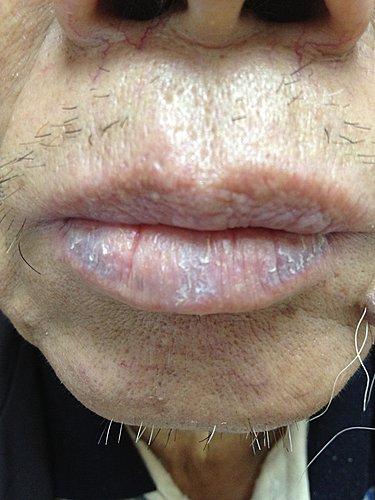
Lichen planus on the lip – reticulate/net-like pattern of lacy white hyperkeratosis.
圖示咀唇扁平苔蘚- 網狀型
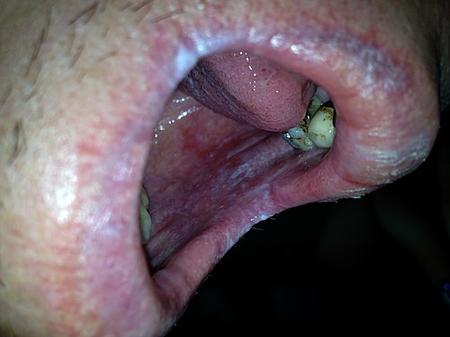
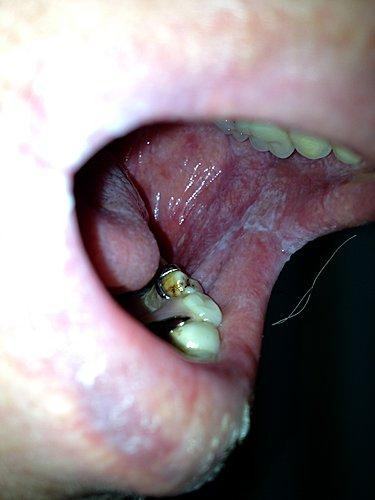
40~60%苔蘚斑塊患者口咽受累. 這是典型的網狀型苔蘚斑, 頰粘膜、唇及其他部位粘膜乳白色角化過度. 另一類型苔蘚斑為糜爛型/潰瘍型,並未顯示於此圖.
40-60% of the patients with lichen planus have oropharyngeal involvement. This is a typical case of reticular lichen planus. Reticulate (net-like) pattern of lacy white hyperkeratosis on buccal mucosa, lips and other parts of the mucus membrane. The other type is erosive/ulcerative lichen planus which is not shown in the photo.
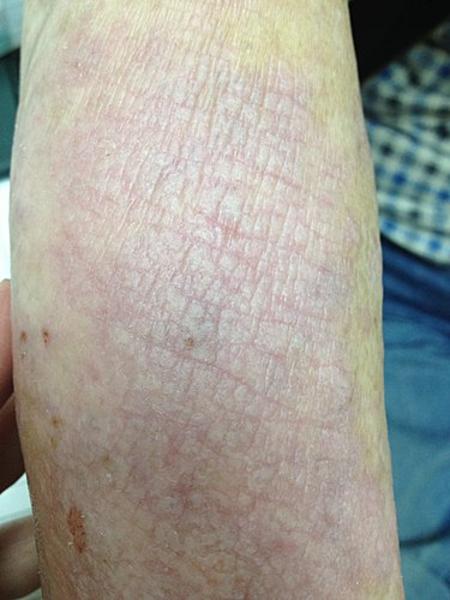
flat-topped, polygonal, sharply defined, violaceous papules. Surface is shiny with fine white lines (Wickham striae).
圖示威克姆氏紋(丘疹上的網)
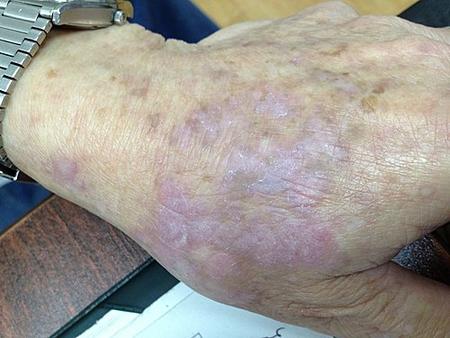
The six p’s of lichen planus – pruritic, purple, polygonal, planar, papules and peripherally located. These papules coalesce/fuse into larger hyperkeratotic plaques. Hyperkeratosis covers Wickham striae and the characteristic violaceous colour of the lesions can be seen only at the very margins.
苔癬的六個「P」特徵:瘙癢(Pruritic)、紫色(Purple)、多邊形(Polygonal)、平坦(Planar)、丘疹(Papules)、周邊分佈(Peripherally located)。
這些丘疹會逐漸融合成較大的角化性斑塊。角化過度覆蓋了 Wickham 紋(白色細紋),而病灶特有的紫羅蘭色僅能在斑塊邊緣清楚顯示。
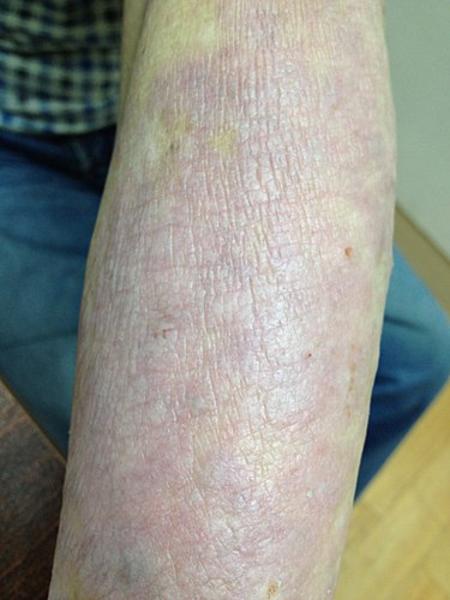
According to textbook, there is a predilection for flexural aspects of arms and legs. However, in this patient, the involved areas are on the extensor aspects of the limbs. 按教科書的說法,扁平苔蘚好發於四肢的屈側,而本例則發生於肢體的伸側.
扁平苔蘚:臨床概述與病理機制
疾病特徵
扁平苔蘚是一種慢性炎症性皮膚病,典型表現為紫紅色、多邊形、界限清楚的丘疹或斑塊,常伴劇烈瘙癢。好發部位包括四肢屈側、手腕內側,以及口腔與生殖器黏膜。雖然任何年齡、性別、種族均可罹患,但最常見於中壯年人群。流行病學調查顯示,在美國皮膚科門診患者中,約有 1% 為扁平苔蘚病例。
病理機制
目前認為扁平苔蘚源於細胞免疫反應異常。病灶皮膚切片可見表皮與真皮交界處淋巴球浸潤,形成典型苔蘚樣炎症反應。研究指出,淋巴球攻擊表皮基底細胞,導致細胞激素分泌並吸引更多炎症細胞。此病被視為自體免疫疾病之一,常與紅斑性狼瘡、皮肌炎、硬皮症、原發性膽管硬化症、潰瘍性大腸炎、重症肌無力等疾病並存。部分患者亦伴隨圓禿或白斑。
臨床表現
- 皮膚病灶:大小不一,從米粒至手掌大小,呈紫紅色丘疹或斑塊,表面可見白色細紋(Wickham striae)。
- 瘙癢:皮膚病灶多伴劇烈瘙癢;口腔或生殖器黏膜病灶則以灼熱或疼痛為主。
- Koebner 現象:外傷或搔抓可誘發新病灶,呈線狀排列。
- 指甲與毛髮:部分患者出現甲板變薄、縱向凹槽、甲背翼狀胬肉;頭皮病灶可導致瘢痕性落髮。
臨床亞型
- 口腔型:女性多見,頰黏膜、舌頭、牙齦出現白色網狀斑塊,常伴灼熱或潰瘍。
- 生殖器型:男性常見於龜頭,女性則表現為外陰白色網狀丘疹或潰瘍。
- 肥厚型:好發於小腿,病灶粗厚、鱗屑明顯,瘙癢劇烈。
- 萎縮型:呈紫紅色斑,鱗屑不明顯。
- 潰瘍型:黏膜病灶伴潰瘍,症狀顯著。
- 毛囊型:又稱 lichen planopilaris,導致瘢痕性落髮。
- 水疱型:下肢常見,伴其他典型病灶。
- 日光型:非洲或印度人常見,病灶位於日曬部位。
- 色素型:深膚色人種常見,病灶呈深咖啡色斑。
病程與預後
扁平苔蘚病程可持續數月至數年。約 85% 患者在 18 個月內緩解,但口腔型病程可長達 5–20 年。潰瘍性口腔扁平苔蘚有罹患鱗狀細胞癌的風險,尤其在吸菸或酗酒患者中更高。
治療原則
- 第一線:強效局部類固醇藥膏(如 clobetasol、betamethasone),每日 2 次,連續使用數月。黏膜病灶可用專用口內膏或粉末狀噴劑。
- 第二線:口服或注射類固醇、紫外線光療、維生素 A 酸、免疫抑制劑(如 cyclosporine)。
- 局部免疫抑制劑:Tacrolimus 或 pimecrolimus 藥膏可抑制 T 細胞活化,對黏膜病灶特別有效。
- 輔助治療:抗組織胺止癢,避免搔抓;生活作息規律,減少壓力,避免刺激性食物。
結論
扁平苔蘚是一種慢性自體免疫性皮膚病,臨床表現多樣,病程漫長但多數患者預後良好。治療以局部類固醇為主,必要時輔以免疫抑制劑或光療。由於部分亞型存在惡變風險,尤其是潰瘍性口腔扁平苔蘚,需醫生長期追蹤。
Lichen Planus: Clinical Overview and Pathogenesis
Key Characteristics
Lichen planus is a long‑lasting inflammatory skin condition. It usually appears as itchy, purple, polygon‑shaped papules or plaques with clear borders. In addition, these lesions often develop on the inner wrists, flexural areas of the arms and legs, and sometimes on the mouth or genital lining. Although anyone can develop lichen planus, middle‑aged adults experience it most often. In fact, studies show that about 1% of dermatology outpatients in the United States receive this diagnosis.
Pathogenesis
Doctors believe lichen planus develops from abnormal immune reactions. Specifically, T‑cells attack the basal layer of skin cells (keratinocytes). As a result, this immune attack triggers cytokine release, which attracts more inflammatory cells and creates the typical lichenoid reaction seen under the microscope. Because of this immune activity, lichen planus is considered an autoimmune disease. Moreover, it often appears alongside other autoimmune conditions such as lupus, dermatomyositis, scleroderma, ulcerative colitis, and myasthenia gravis. In addition, it links to skin disorders like alopecia areata and vitiligo.
Clinical Features
- Skin lesions: Lesions vary in size, from tiny papules to large plaques. They often look purple and polygonal, and sometimes merge together. Furthermore, fine white streaks, called Wickham striae, may appear on the surface.
- Itching: Intense itch is common. However, oral or genital lesions usually cause burning or pain instead.
- Koebner phenomenon: New lesions can form along scratch marks or trauma sites.
- Nails and hair: Patients may develop nail thinning, ridging, or dorsal pterygium. In addition, scalp lesions can lead to scarring hair loss.
Clinical Variants
- Oral lichen planus: More common in women. White reticular patches appear on the cheeks, tongue, gums, or lips. Ulceration may cause burning, pain, and sensitivity to spicy foods.
- Genital lichen planus: Men may show purple or red plaques on the glans. Women often develop white reticular papules or erosions on the vulva.
- Hypertrophic type: Thick, scaly plaques on the shins or ankles, often very itchy.
- Atrophic type: Thin purple patches with little scaling.
- Erosive type: Painful ulcerated lesions in the mouth or genital area.
- Follicular type (lichen planopilaris): Papules around hair follicles that can cause scarring alopecia.
- Bullous type: Blisters or bullae, usually on the legs.
- Actinic type: Lesions on sun‑exposed areas, more common in darker skin.
- Pigmented type: Dark brown patches, also more frequent in darker skin tones.
Course and Prognosis
Lichen planus may last for months or even years. Around 85% of patients improve within 18 months. However, oral lichen planus often persists for 5–20 years. Importantly, erosive oral lesions carry a small risk of turning cancerous, especially in smokers or heavy drinkers. Therefore, doctors recommend close monitoring. In addition, patients should maintain regular follow‑up visits to track changes and prevent complications.
Treatment Principles
- First‑line therapy: Strong topical corticosteroids such as clobetasol or betamethasone, applied twice daily for several months. Special formulations may be needed for mucosal lesions.
- Second‑line therapy: Systemic corticosteroids, phototherapy, retinoids, or immunosuppressants like cyclosporine.
- Topical immunomodulators: Tacrolimus or pimecrolimus ointments can reduce T‑cell activity, especially useful for oral lesions.
- Supportive care: Antihistamines for itch, avoiding trauma, managing stress, and dietary changes (such as avoiding spicy or hard foods for oral lesions).
Conclusion
Lichen planus is a chronic autoimmune skin disorder with many clinical forms. While most patients eventually improve, relapses are common and treatment may take years. Furthermore, oral erosive lichen planus requires careful follow‑up because of its cancer risk. Ultimately, patient education, lifestyle adjustments, and long‑term dermatology care play a key role in achieving the best outcomes.