脫食墨
醫學討論:二氧化碳CO2激光氣化術在男性上唇皮膚痣治療中相較於手術切除之美學與功能優越性
Discussion: Aesthetic and Functional Superiority of CO2 Laser Ablation over Surgical Excision for Upper Cutaneous Lip Nevi in Male Patients
上唇皮膚部位墨痣的臨床描述:
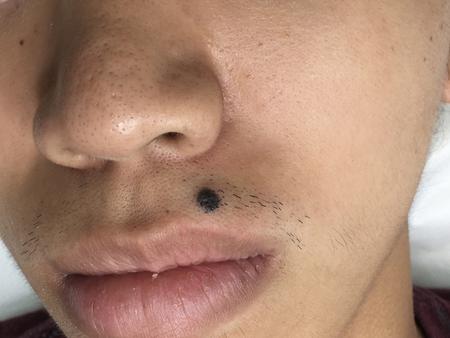
脫除此類墨/痣又稱作「脫食墨」或「脫食痣」。此顆單一色素之病灶位於上唇皮膚部位,鄰近紅唇邊緣。病灶呈黑色,略微隆起,高出周圍皮膚表面約 0.2 公分。最長直徑為0.5公分色澤均勻一致,邊界清晰且界線分明。值得注意的是,病灶表面可見約 7 至 8 根終毛穿出。該墨痣於患者約 5 歲時出現,至今已存在約 25 年。
Clinical description:
This solitary, pigmented lesion is located on the upper cutaneous lip, adjacent to the vermilion border. The lesion presents as a black, slightly elevated mole, rising approximately 0.2 cm above the surrounding skin surface. It demonstrates a homogeneous coloration, with clear and well-defined borders. Notably, 7 to 8 terminal hairs emerge from the surface of the lesion. The mole has been present for approximately 25 years, originating around the age of 5.
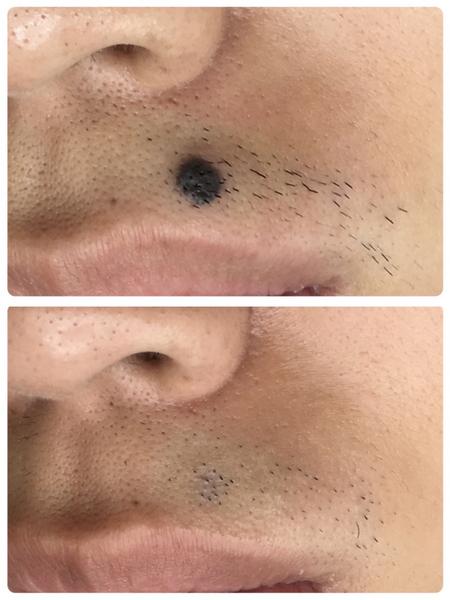
脫食墨之前拍攝:此乃位於上唇的上方鬍鬚位置內的的一粒墨痣 A Mole situated on the upper cutaneous lip
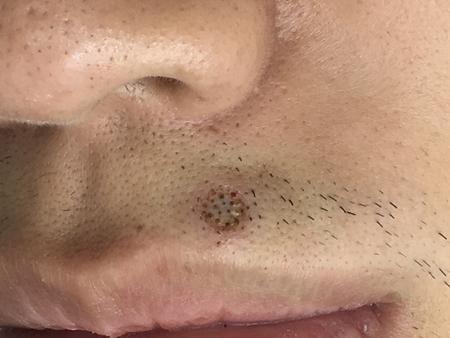
脫食墨後拍攝:激光治療後的傷口-可見鬍鬚的「根部」不被破壞,即是毛髮仍然會長出來,不會被脫掉 After CO2 laser treatment, the mole was removed while hair follicles under the mole were well preserved. This means hair will grow from that area after the wound had healed.
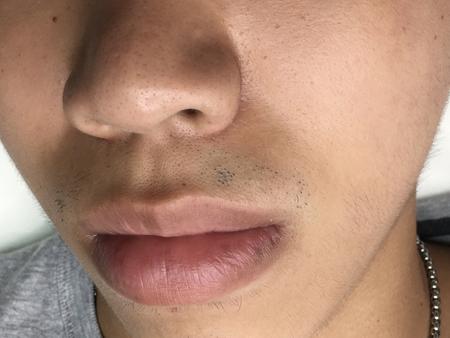
脫食墨後的傷口於2個星期後癒合,2個月後疤痕漸漸散去
Two months after the laser treatment, the scar had faded
脫食墨的前後對照:
近鏡觀察,比較脫墨前後的圖片,可見毛髮沒有被破壞,但是該墨痣已經完全被脫除。
Before and after photos:
Close up pictures showed that the mole had been completely removed with minimal scar while the hair in that area had not been affected.
討論:二氧化碳CO2激光氣化術在男性上唇皮膚痣治療中相較於手術切除之美學與功能優越性
在面部皮膚病灶的治療中,當病灶部位處於上唇皮膚部這類顯眼的位置時,臨床上面臨著極具挑戰性的抉擇。上唇皮膚部的上界為鼻基底,下界為唇紅緣,其解剖特徵包含精細的面部輪廓曲線、豐富的血管分布以及活躍的面部表情肌群。針對該區域中型(通常為 3 至 6 毫米)良性黑色素細胞痣或皮內痣的治療,臨床醫師必須在「完整清除病灶」與「盡量減少美學及功能損傷」之間取得平衡。儘管傳統的手術切除術長期以來被視為皮膚病灶切除的標準做法,但在這一特別部位,二氧化碳(CO2)激光氣化術展現出了顯著的臨床、美學及功能優勢。
優異的美學保留與最小疤痕形成
相較於手術切除術,CO2 激光氣化術治療上唇皮膚部墨痣的核心優勢在於它能極大地減少疤痕形成:
- 避免產生拉力的切口: 全層手術切除需要沿著或跨越面部皮膚鬆弛線(RSTLs)進行紡錘形(梭形)切口,並進行一期縫合。在上唇區域,一期縫合會使周圍皮膚承受因日常面部表情(如說話、進食、剃鬚)所引起的機械拉力。這種張力往往會導致術後疤痕增寬、增生,甚至引致人中或唇紅緣等局部解剖標誌變形。
- 精準的逐層氣化: CO2 激光能量(波長 10,600 奈米)能迅速被細胞內的水分吸收,使醫生能夠以亞毫米級的精準度,將墨痣組織逐層氣化至真皮網狀層深部。由於深層真皮基質的結構框架得以保持完整,傷口會透過二次意合(Secondary intention)經由快速的上皮再形成進行癒合,而非透過線性收縮。這能形成平整、極不明顯的疤痕,並與周圍皮膚自然融為一體。
保留男性面部毛髮與毛囊完整性
對男性患者而言,上唇皮膚部是主要的生鬚區域(鬍鬚區)。全層手術切除對終毛(Terminal hair)的生長構成了特定挑戰:
- 毛囊的切除: 全層切除會連同皮瓣一併移除皮下的毛囊,導致鬍鬚區域留下永久性的無毛區域或縫隙。
- 毛囊損傷控制: 激光氣化術允許醫生在淺層至中層真皮內氣化墨痣組織,同時保留位於真皮深層或皮下脂肪層的健康毛囊。這能有效保留局部的毛髮密度,避免在上唇形成斑塊狀脫髮/脫毛。
熱凝固止血與術中精準度
上唇具有由面動脈分支(特別是上唇動脈)供給的豐富血管系統:
- 清晰的術野: 切入上唇具豐富血管的真皮層進行手術切除時,常會導致毛細血管及動脈活躍出血,需要進行局部電灼止血或多重深層結紮。相較之下,CO2 激光能產生狹窄的熱凝固區(通常為 30 至 50 微米),在氣化組織的同時,能即時封閉直徑達 0.5 毫米的微血管及淋巴管。
- 提升視覺控制力: 這種即時的熱凝固止血效果能提供乾淨、清晰的術野,使醫生能夠實時觀察組織變化,並清晰區分墨痣巢結構(即墨痣的根部)與正常的真皮組織。
患者體驗與術後恢復狀況
從患者體驗的角度來看,CO2 激光氣化術相較於手術切除術能顯著降低發病率及不適感:
| 臨床特徵 | CO2 激光氣化術 | 手術切除術 |
| 組織創傷 | 低(僅限於狹窄熱凝固區) | 中度至高度(手術刀切開及真皮剝離) |
| 縫線需求 | 無需縫合 | 需要(真皮及表皮縫合) |
| 術後疼痛 | 極輕微(神經末梢被熱效應封閉) | 輕度至中度(切口張力所致) |
| 修復期 | 7 至 10 天結痂及上皮再形成 | 5 至 7 天拆線;疤痕成熟需數週 |
| 恢復剃鬚 | 上皮再形成後可溫和剃鬚 | 需等待傷口完全癒合及拆線後 |
重要臨床注意事項
儘管 CO2 激光氣化術在處理上唇中型墨痣時具有明確的美學優勢,但嚴謹的病例篩選依然至關重要:
- 術前皮膚鏡檢查: 由於激光氣化會破壞組織結構,除非在激光氣化前立即進行淺層刮除切片(Shave biopsy),否則無法進行標準的病理組織學分析。臨床醫生必須在進行氣化前,透過臨床檢查及皮膚鏡確認該病灶完全屬於良性。
- 深度控制: 為防止產生凹陷性(萎縮性)疤痕,氣化深度應止於真皮乳頭層至網狀層交界處。若痣細胞蔓延至真皮層或更深,氣化深度需要更深,傷口難以復原。在這情況下,把傷口縫線可以令傷口更快復原,疤痕更美觀。
結論
針對男性上唇皮膚部的中型良性痣,CO2 激光氣化術展現出超越傳統手術切除術的顯著優勢。透過消除全層切口與縫合的需求,此技術避免了疤痕增寬、保留了男性鬍鬚毛囊的完整性、透過即時止血維持了精確的術中視覺控制,並將術後修復期降至最低。在搭配嚴謹的術前皮膚鏡評估下,CO2 激光氣化術在臨床療效與面部美學保留之間取得了最佳平衡。
Discussion: Aesthetic and Functional Superiority of CO2 Laser Ablation over Surgical Excision for Upper Cutaneous Lip Nevi in Male Patients
The removal of facial cutaneous lesions presents a delicate clinical challenge, particularly when situated in prominent aesthetic units such as the upper cutaneous lip of a man. The upper cutaneous lip—bounded superiorly by the nasal base and inferiorly by the vermilion border—is characterized by fine aesthetic contours, high vascularity, and active mimetic musculature. When treating a medium-sized (typically 3–6 mm) benign melanocytic or intradermal nevus in this area, clinicians must balance complete lesion clearance with minimal cosmetic and functional disruption. While surgical excision has long been a conventional standard for skin lesion removal, carbon dioxide (CO2) laser ablation offers distinct clinical, aesthetic, and functional advantages in this specific anatomical context.
Superior Aesthetic Preservation & Minimal Scarring
The primary advantage of CO2 laser ablation over surgical excision on the upper cutaneous lip lies in scar minimizeation.
- No Tension-Inducing Incisions: Full-thickness surgical excision requires an elliptical incision along or across facial relaxed skin tension lines (RSTLs), followed by primary suturing. On the upper lip, primary closure subjects the surrounding skin to mechanical tension caused by daily facial expressions (speaking, eating, shaving). This tension often leads to surgical scar widening, hypertrophy, or distortion of local landmarks like the philtrum or vermilion border.
- Precise Layer-by-Layer Vaporization: CO2 laser energy (wavelength 10,600 nm) is rapidly absorbed by intracellular water, allowing the surgeon to vaporize the nevus layer-by-layer down to the deep reticular dermis with sub-millimeter precision. Because the structural framework of the deeper dermal matrix remains intact, healing occurs via secondary intention through rapid re-epithelialization rather than linear contraction, producing a flat, inconspicuous scar that blends seamlessly into the surrounding skin.
Preservation of Male Facial Hair & Follicular Integrity
For male patients, the upper cutaneous lip is a primary hair-bearing area (mustache region). Surgical excision poses specific challenges to terminal hair growth:
- Excision of Hair Follicles: Full-thickness excision removes the underlying hair follicles within the tissue ellipse, creating a permanent, hairless line or gap in the mustache.
- Follicular Disruption: Laser ablation allows for superficial-to-mid dermal vaporization of the nevus tissue while sparing deeper, healthy hair follicles located in the deep dermis or subcutaneous fat. This preserves local hair density and avoids patchy alopecia across the upper lip.
Thermal Hemostasis and Intraoperative Precision
The upper lip features rich vascularity supplied by branches of the facial artery (specifically the superior labial artery).
- Clear Surgical Field: Surgical excision into the vascular dermis of the lip often results in active capillary and arterial bleeding, requiring focal electrocautery or multiple deep ties. In contrast, the CO2 laser generates a narrow zone of thermal coagulation (typically 30–50 µm) that instantly seals small blood vessels and lymphatic channels up to 0.5 mm in diameter as it vaporizes tissue.
- Enhanced Visual Control: This immediate thermal hemostasis yields a dry, clear surgical field, enabling the practitioner to visually monitor tissue changes in real-time and distinguish nevus nest architecture from normal dermis.
Patient Experience and Recovery Profile
From a patient-centered perspective, CO2 laser ablation significantly reduces morbidity compared to surgical excision:
| Clinical Feature | CO2 Laser Ablation | Surgical Excision |
| Tissue Trauma | Low (confined thermal zone) | Moderate–High (scalpel cut & dermal undermining) |
| Sutures | None required | Required (dermal & epidermal sutures) |
| Post-Op Pain | Minimal (nerve endings sealed by thermal effect) | Mild-to-moderate (incisional tension) |
| Downtime | 7–10 days of crusting/re-epithelialization | 5–7 days until suture removal; weeks for scar maturation |
| Shaving Clearance | Resumed gently after re-epithelialization | Delayed until complete wound healing and suture removal |
Important Clinical Considerations
While CO2 laser ablation provides clear cosmetic benefits for medium-sized upper lip moles, appropriate case selection remains paramount:
- Pre-Operative Dermoscopy: Laser ablation destroys tissue structure, making standard histological analysis impossible unless a shallow shave biopsy is performed immediately prior to laser vaporization. Clinicians must confirm via clinical examination and dermoscopy that the lesion is entirely benign before ablation.
- Depth Management: To prevent a depressed (atrophic) scar, vaporization must stop at the papillary-to-reticular dermal junction. If nevus cells extend into the deep dermis or beyond, a deeper ablation depth is required, impairing primary wound healing. In such cases, surgical closure with sutures accelerates healing and yields a superior cosmetic scar outcome.
Conclusion
For a medium-sized benign nevus on the upper cutaneous lip of a man, CO2 laser ablation represents a highly favorable alternative to traditional surgical excision. By eliminating the need for full-thickness incisions and sutures, it avoids scar widening, preserves the integrity of male mustache hair follicles, maintains precise visual control through instant hemostasis, and minimizes post-procedure downtime. When supported by rigorous pre-operative dermoscopic evaluation, CO2 laser ablation offers an optimal balance of clinical efficacy and facial aesthetic preservation.